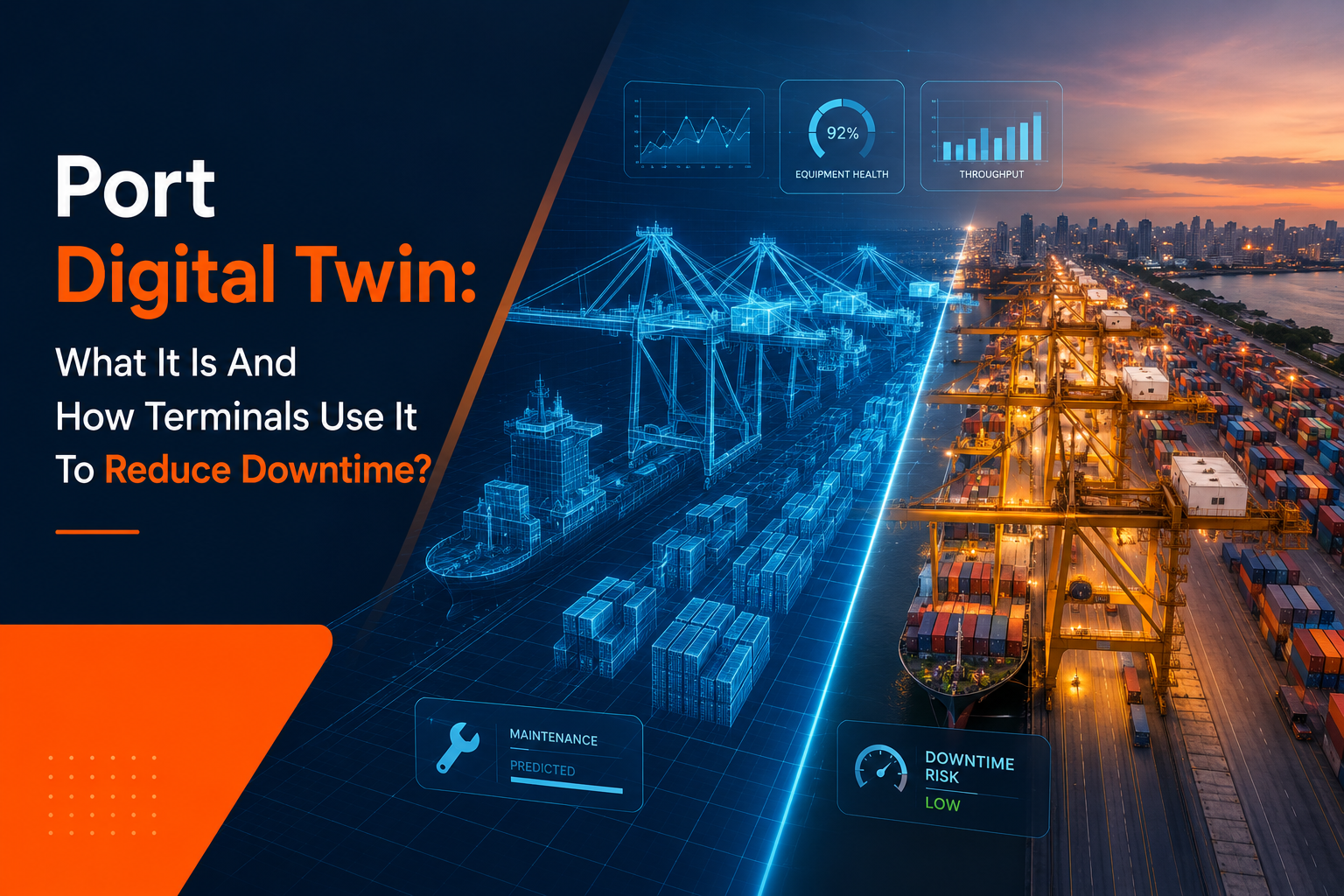
Port Digital Twin: What It is And How Terminals Use It To Reduce Downtime?
Even though the amount of trade around the world is growing, ports are pressured to move cargo faster, cut down on turnaround times, and also

Even though the amount of trade around the world is growing, ports are pressured to move cargo faster, cut down on turnaround times, and also
As e-commerce grows, with sales expected to exceed USD 8 trillion by 2027 old logistics models are struggling. They rely on planning and reactive fixes
In the second half of 2023, container ships made nearly 250,000 port calls globally. Vessel sizes are growing, berth windows are shrinking, and route disruptions

Container vessels typically spend 1.5 to 2.5 days in port globally, with congestion pushing turnaround beyond 4 days in high-volume terminals, based on 2026 port

Modern ports generate large volumes of operational, financial, and vessel data daily. This data includes the movements of containers in Terminal Operating Systems (TOS), financial

While most industries have adopted digital transformation, many ports still operate with fragmented and legacy systems. As cargo volumes surge with time and supply chains
Even though the amount of trade around the world is growing, ports are pressured to move cargo faster, cut down on turnaround times, and also
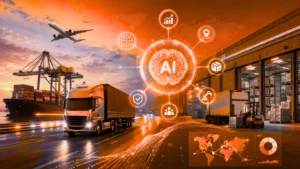
As e-commerce grows, with sales expected to exceed USD 8 trillion by 2027 old logistics models are struggling. They rely on planning and reactive fixes
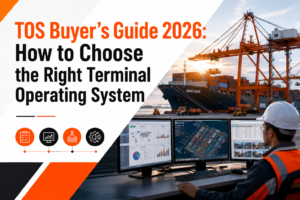
In the second half of 2023, container ships made nearly 250,000 port calls globally. Vessel sizes are growing, berth windows are shrinking, and route disruptions
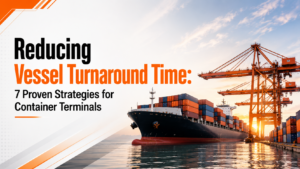
Container vessels typically spend 1.5 to 2.5 days in port globally, with congestion pushing turnaround beyond 4 days in high-volume terminals, based on 2026 port
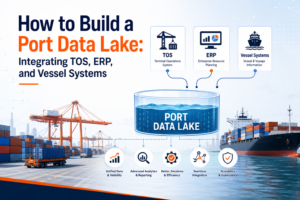
Modern ports generate large volumes of operational, financial, and vessel data daily. This data includes the movements of containers in Terminal Operating Systems (TOS), financial

While most industries have adopted digital transformation, many ports still operate with fragmented and legacy systems. As cargo volumes surge with time and supply chains