

Even though the amount of trade around the world is growing, ports are pressured to move cargo faster, cut down on turnaround times, and also keep the operations as efficient as possible. Broken equipment, traffic, or poor planning can cause minor delays, which can result in financial losses and disrupt the supply chain.
This is how the idea of a “digital twin” port is changing the shipping business.
This blog explains port digital twins, how they work, and how terminals are using advanced tools like virtual port simulation, 3D port modeling, and crane digital twin systems to reduce downtime and improve efficiency.
Key Insights
- A port digital twin is a real-time virtual model of a port that mirrors operations, assets, and workflows.
- It uses IoT data, 3D modeling, and simulation tools to monitor performance and predict issues.
- Predictive maintenance helps detect equipment failures early and avoid costly downtime.
- Virtual port simulation allows testing of scenarios like traffic flow, vessel scheduling, and infrastructure changes.
- Improves crane performance, yard efficiency, and resource allocation.
- Enables data-driven decision-making instead of guesswork.
- Reduces delays, congestion, and operational disruptions.
- Widely adopted by global ports like Rotterdam, Singapore, and Los Angeles.
- Despite challenges like cost and data integration, it delivers long-term efficiency, cost savings, and scalability.
What is a Port Digital Twin?
A port digital twin is a dynamic virtual replica of a physical port’s infrastructure and operations.
By integrating real-time data from IoT sensors, AI, CCTV, and LiDAR, it allows operators to simulate scenarios, monitor container movements, and optimize vessel scheduling in real-time.
How Does Digital Twin Technology Work in Ports?
In the case of ports, digital twin technology works by combining real-world operations with a digital environment that shows how things are in the real world. The very first step is to gather data from various parts of a terminal like vehicles, sensors, cranes and the OS of the terminal.
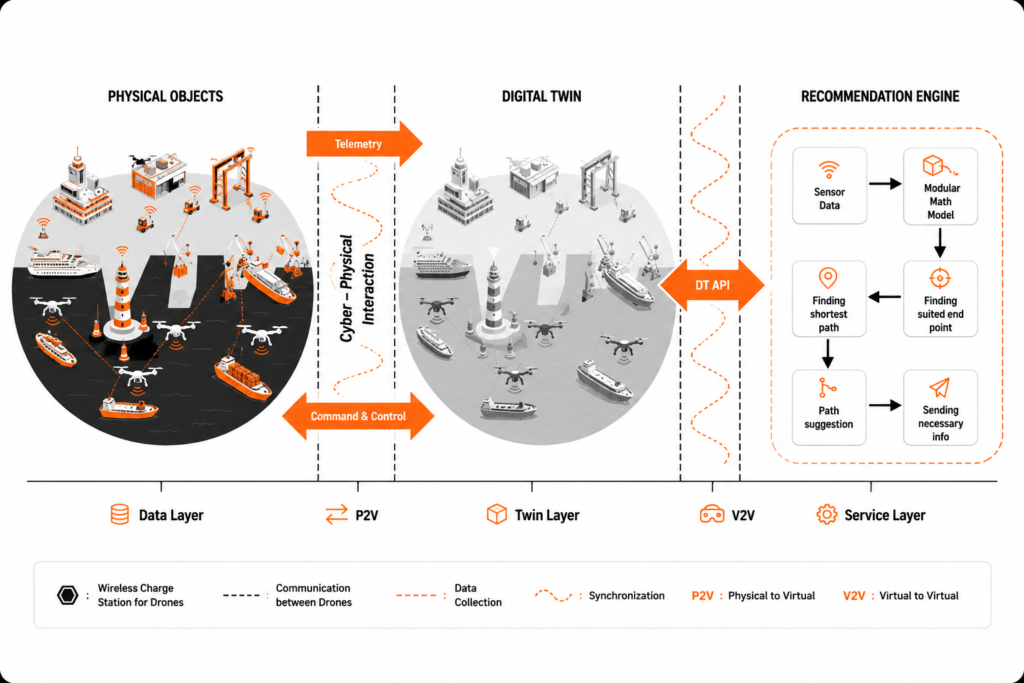
Then, this real-time data is sent to a central platform, where it is processed and used to keep the digital twin up to date. The system can test different scenarios and copy ongoing operations using advanced analytics and simulation engines that don’t affect the way things are done in real time.
For example, operators can use virtual port simulations to see how changes in the flow of containers or ship schedules might affect how a port works. Simultaneously, real-time port monitoring promptly identifies any issues, including equipment slowdowns or traffic congestion.
Key Applications of Digital Twin in Terminal Operations
Here are some of the key applications of digital twins in terminal operations:
Crane Digital Twin for Equipment Optimization
A crane’s digital twin is an important part of making equipment more reliable and efficient in port terminals. When making a virtual copy of each crane, operators keep an eye on load cycles, movement patterns, energy use, and wear and tear that happen in real time.
This constant flow of data helps terminals spot issues like odd vibrations, slower lifting speeds, or operations that don’t go as planned, which could be signs of future breakdowns. Instead of waiting for something to go wrong, operators can resolve problems before they happen. This helps cut down on downtime and causes important equipment to last longer.
For example, operators can adjust crane allocation based on demand or streamline workflows to minimize idle time. Such optimization eventually leads to better turnaround times for vessels and more effective cargo handling.
Yard and Traffic Flow Optimization
One of the trickiest parts of running a port is recording how containers move around the yard. Digital twins are a wonderful way to ensure that a process runs smoothly. All thanks to real-time data and simulation tools.
With digital twins, operators can find bottlenecks, routes that are not working out well, and delays in moving containers. With the help of virtual port simulation, they can try various yard layouts, stacking methods, and traffic patterns to find the best ones. This particular level of optimization helps reduce internal bottlenecks and makes it easier for various operational areas to work together.
The overall throughput increases as trucks wait less, containers move easily and most of them get through without any trouble.
Even small changes to the yard and traffic flow can make a big difference in how much work gets done and how much money is saved in high-volume terminals.
Vessel Berthing and Scheduling Simulation
Effective management of vessels is key to the success of a port, and digital twins help terminals make better decisions about where to dock and when to do it. By looking at both current and past data, a digital twin can simulate when a ship arrives, leaves, and turns around in different situations.
This method helps operators better plan berth assignments and ensure ships are in the right place at the right time. It also helps cut down on wait time, keeps berths from clashing, and makes efficient use of the port as a whole.
Terminals can simulate “what-if” scenarios like weather delays or cargo changes. This particular approach ensures that schedules stay adaptable and reliable, even if the operating environments change. As a result, ports can manage traffic more efficiently while continuing to provide reliable and satisfactory services.
Virtual Port Simulation for Planning
Virtual port simulation is a powerful application of digital twin technology. This allows terminals to test strategies and plan future operations without disrupting real-world activities. With the help of a digital replica of the port, operators can easily simulate various scenarios, such as changes in cargo demand, infrastructure upgrades and the introduction of new equipment.
For any sort of long-term planning as well as growth projects, this feature is useful. Instead of trying to guess what is going to happen, people who take decisions can use simulations based on data to see how different investments and changes to operations affect various things. This functionality mitigates risk and ensures optimal utilization of resources.
How Do Port Digital Twins Help Reduce Downtime?
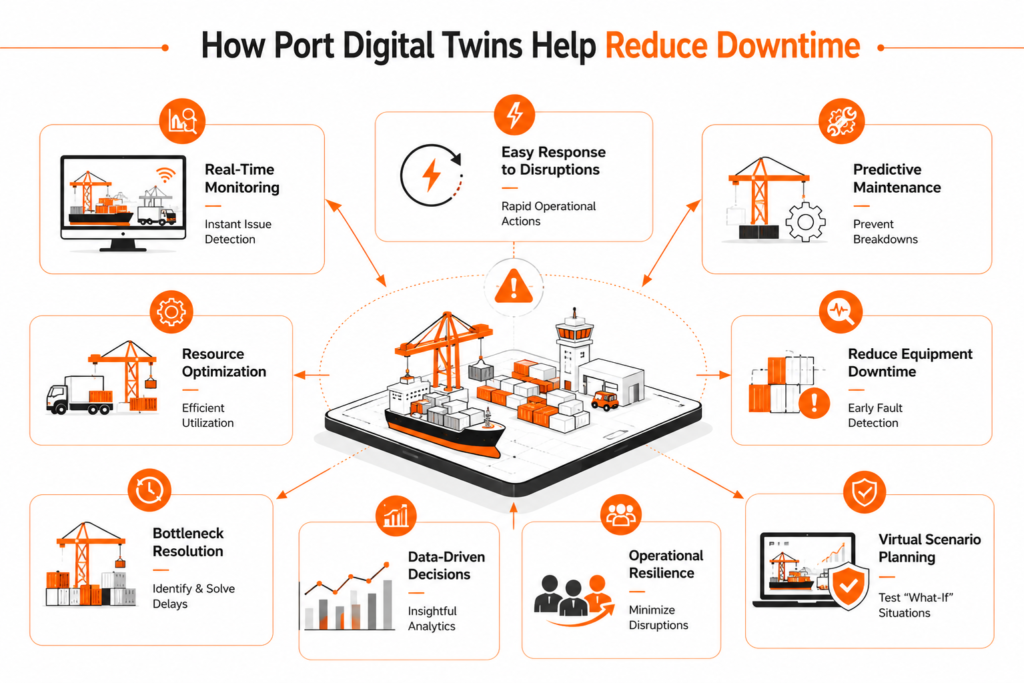
Let’s take a look at how port digital twins help reduce downtime.
Real-Time Port Monitoring For Instant Issue Detection
Ensure to monitor equipment, vehicles, and work flows to identify delays, traffic or performance issues.
Easy Response To Operational Disruptions
The digital twin enables rapid coordination during disruptions such as equipment failures, weather events, or traffic congestion by providing scenario modeling and real-time operational impact analysis.
Predictive Maintenance in Ports
Uses data and analytics to predict when equipment will break down, so repairs can be done before they happen.
Optimized Resource Allocation
Make sure to utilize trucks, cranes, and workers effectively to minimize downtime and idle time.
Bottleneck Identification And Resolution
It highlights inefficiencies in yard operations, traffic flow and scheduling before they escalate to delays.
Virtual Port Simulation For Scenario Planning
This lets the terminals test all the “what if” scenarios, like equipment failures, peak loads, or even weather disruptions, without affecting live operations.
Improved Coordination Across Terminal Operations
Shipping lines, terminal operators, customs authorities, logistics providers, and transport agencies can collaborate through a unified system, improving workflow alignment and reducing delays.
Data-Driven Decision-Making
Operators can track KPIs across departments, enabling continuous performance improvement, better accountability, and more efficient terminal utilization.
Predictive Maintenance in Ports Using Digital Twins
Here is how predictive maintenance in ports can be done using digital twins:
Shift From Reactive To Proactive Maintenance
Digital twins enable ports to shift from fixing equipment after failure to identifying issues before they occur.
Continuous Monitoring Of Asset Health
Using real-time data from sensors, a port digital twin tracks parameters like temperature, vibration, load cycles, and performance trends.
Early Fault Detection And Anomaly Alerts
Helps identify unusual patterns in equipment behavior, such as crane slowdowns or irregular movements. This helps trigger early warnings.
Less Unplanned Downtime
By addressing issues in advance, terminals can avoid breakdowns, which can disrupt operations.
Optimized Maintenance Scheduling
It is possible to plan maintenance activities during low activity periods. This helps reduce its impact on terminal productivity.
Improved Lifespan Of Critical Equipment
Regular and data-driven maintenance causes reduction of wear and tear. This, in turn, extends the life of cranes, conveyors and other assets as well.
Less Maintenance And Reduced Repair Costs
Prevention of major failures helps reduce the expensive emergency repairs as well as replacement costs.
Crane Digital Twin For Targeted Insights
A crane digital twin gives complete analytics on crane performance. It helps to prioritize maintenance for any sort of high-risk equipment.
Integration With Real-Time Port Monitoring Systems
Combines live data with predictive analytics to create a comprehensive maintenance strategy.
Improves Safety And Operational Reliability
Any kind of well-maintained equipment helps reduce the risk of accidents and makes sure that port operations are uninterrupted and smooth.
Benefits of Port Digital Twin Technology
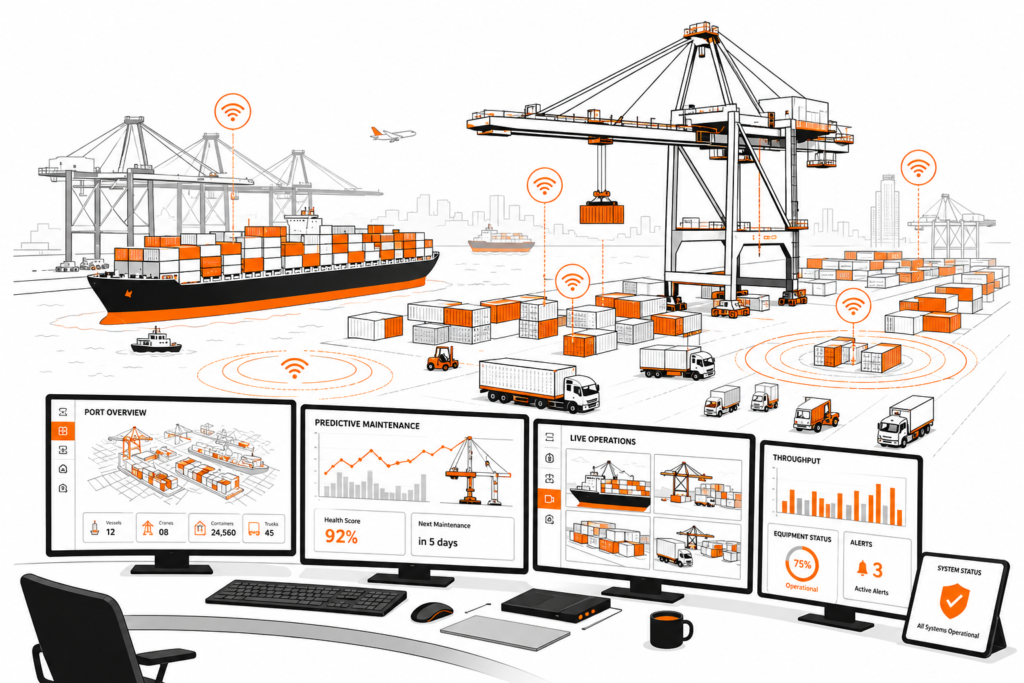
Let us quickly take a look at some of the benefits of digital twin technology:
Better operational efficiency
Helps optimize workflows across terminal operations. This helps to reduce delays and improve cargo operations and throughput.
Real-time visibility across the port
It allows real-time port monitoring of equipment, assets and other kinds of activities for better control, along with coordination.
Reduced downtime and disruptions
It helps identify potential issues early on and assists with predictive maintenance in ports. This avoids any sort of unexpected failures.
Improved decision-making with data insights
Uses analytics and simulations to support faster, more accurate operational and strategic decisions.
Better resource utilization
Ensures efficient deployment of vehicles, workforce and cranes. This helps to minimize idle time.
Good planning with virtual port simulation
This allows the easy testing of various operational scenarios without having an impact on real-world operations.
Increased equipment performance and lifespan
Proper monitoring using tools such as the crane digital twin helps to maintain assets without any trouble.
Optimized yard and traffic management
It helps to reduce congestion and also improves container movement in the terminal.
Cost savings across operations
It helps reduce maintenance expenses, decrease delays, and improve operational efficiency.
Improved safety and risk management
It helps detect potential hazards early and improves overall safety across all terminal operations.
Scalability for future expansion
It helps support long-term growth with insights from 3D port modeling along with simulation capabilities.
Sustainability improvements
It helps reduce fuel consumption, emissions, and energy usage through optimized operations.
Real-World Examples of Digital Twin in Ports
Let us take a brief look at some of the real-world examples of digital twins in ports:
Port of Rotterdam (Netherlands)
This is one of the most advanced adopters of port digital twin technology. Rotterdam has a complete digital replica of its port. The system allows real-time port monitoring and predictive insights as well. The system helps optimize vessel traffic, improve berth planning, reduce delays, and contribute to higher operational efficiency.
Port of Singapore (PSA International)
Singapore has digital twin and simulation technologies. This helps improve digital twin terminal operations, specifically in yard planning as well as vessel scheduling. With the help of advanced virtual port simulation, the port can test various operational scenarios and improve TAT in one of the busiest shipping hubs in the world.
Port of Los Angeles (USA)
The Los Angeles port has a digital twin platform, which helps improve visibility across the entire supply chain. The combination of data from various stakeholders allows better coordination, helps reduce congestion and boosts the overall terminal efficiency.
Port of Antwerp-Bruges (Belgium)
This port has digital twin solutions to help support predictive maintenance at various ports and optimize infrastructure usage. The analysis of real-time and historical data helps improve asset reliability and reduces downtime across all operations.
Port of Hamburg (Germany)
Hamburg uses digital twin technology to manage traffic flows as well as infrastructure within a port. Strong 3D port modeling capabilities help simulate traffic conditions and optimize logistics movements. This, in turn, helps reduce bottlenecks while improving efficiency at the same time.
Challenges in Implementing Port Digital Twins
Let us take a brief look at all the challenges involved in implementing port digital twins:
High initial investment costs
Setting up a port digital twin needs adequate investment in sensors, IoT infrastructure, software platforms and all other data integration systems.
Complex data integration
Ports operate with multiple legacy systems (TOS, ERP, and equipment software), making it challenging to unify data into a single digital environment.
Dependence on data quality and accuracy
Any kind of inaccurate or incomplete data can result in ineffective real-time port monitoring as well as simulation outcomes.
Integration with existing terminal operations
Aligning digital twin technology with ongoing digital twin terminal operations without disrupting workflows can be difficult.
Skilled workforce requirements
The process of implementing and managing digital twins needs expertise in AI, IoT, and data analytics, as well as port operations. This may not always be easily available.
Cybersecurity risks
The increase in connectivity and data exchange creates vulnerabilities. This makes ports more susceptible to cyber threats.
Scalability challenges
Expansion of digital twin systems across large or multi-terminal ports can be complex as well as resource-intensive.
Resistance to change
It might be difficult for operational teams to adopt new technologies. This is especially true when shifting from traditional processes.
Conclusion
As ports continue to face pressure because of improved efficiency, this helps to reduce delays and handle growing cargo volumes. The adoption of a port digital twin is becoming a strategic necessity rather than a future concept. The combination of real-time monitoring, 3D port modelling and virtual port simulation, and digital twins provides terminals with powerful, data-driven views of their operations.
Most importantly, they allow a shift from reactive problem solving to proactive optimization. If it is predictive maintenance in ports, improved equipment performance using crane digital twins, or better planning across terminal workflows, digital twins play a role in helping reduce downtime and improve productivity.
There are different challenges in the implementation of long-term benefits. It ranges from operational efficiency and cost savings to better safety and scalability. All of this outweighs the initial complexities easily. With the evolution of technology, digital twins have become a core component of smart, future-ready ports, helping terminals operate with greater precision, confidence, and resilience.
FAQs
What is a port digital twin in simple terms?
A port digital twin is a virtual replica of a physical port that uses real-time data to monitor, simulate, and optimize operations such as cargo handling, vessel movement, and equipment performance.
How does a digital twin reduce downtime in ports?
It uses real-time port monitoring and predictive analytics to help detect issues early on. This helps prevent equipment failures, optimize workflows and reduce unplanned downtime.
What is predictive maintenance in ports?
Predictive maintenance in ports involves using data and analytics to forecast equipment issues before they occur, allowing timely repairs and avoiding unexpected breakdowns.
What is the role of a crane digital twin?
A crane digital twin helps monitor crane performance, and that too, in real time. It helps identify inefficiencies and schedule maintenance. This ensures better productivity and reduced equipment failure.
How is virtual port simulation used in terminal operations?
Virtual port simulation lets operators test various scenarios, such as traffic flow, vessel scheduling, and infrastructure changes. It does not affect real operations and helps improve planning along with decision-making.
Are port digital twins expensive to implement?
The initial setup can be costly because of infrastructure and integration requirements, but the long-term benefits, such as reduced downtime, improved efficiency, and cost savings, make it a worthy investment.
