

Global ports are evolving into digitally integrated trade ecosystems driven by structural shifts in supply chains. Global maritime trade is expected to grow by around 2% annually from 2026 to 2030. As growth increases, numerous challenges such as operational strain, long routes, and high uncertainty are likely to arise.
Traditional port operating models are built around siloed systems and manual coordination. However, the traditional functioning is leading to widespread misalignment. For this reason, smart ports are becoming extremely crucial for supply chain infrastructure.
This article defines smart ports and outlines how they enable scalable, data-driven, and sustainable global trade.
What is a Smart Port?
A smart port is an integrated, data-driven ecosystem where operations are digitally orchestrated end-to-end. The smart port technology integrates digital technologies into innovative solutions, driving security, efficiency, and environmental sustainability.
There’s an adoption of intelligent systems and automation that helps streamline tasks. It’s become the key to optimizing tasks such as cargo handling, vessel traffic management, energy use, and resource allocation.
The advanced ports help streamline operations, improve communication with stakeholders, and ensure a seamless flow of goods. It enables real-time decision-making through AI-driven analytics, improving throughput, reducing costs, and minimizing environmental impact.
What are the Prominent Smart Port Technologies?
The different technologies play an important role in the evolution of smart ports. It ensures better operation through sustainability, agility, and accurate precision.
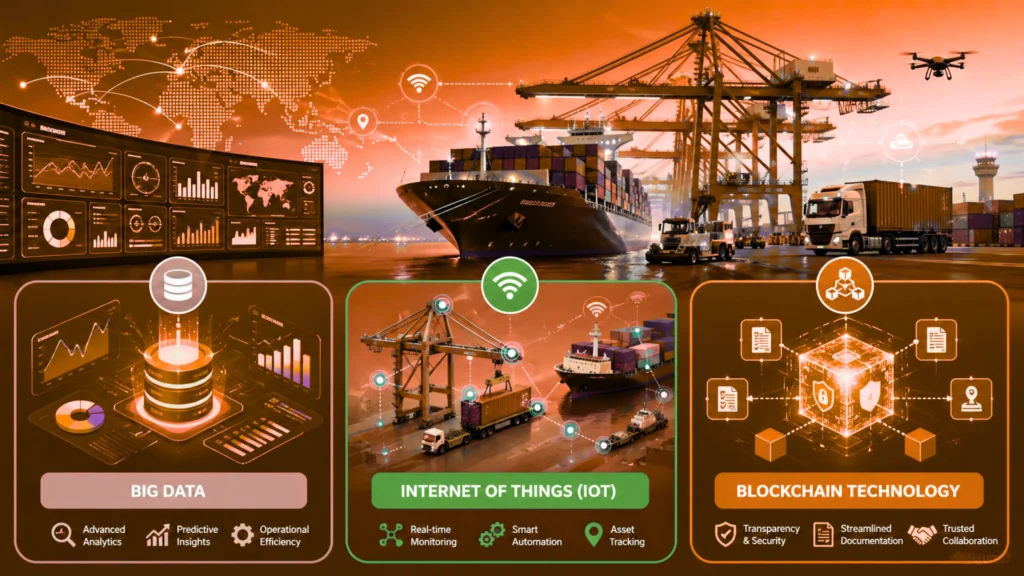
Below are some of the top smart port technologies:
1. Big Data
Big Data enables predictive and prescriptive decision-making across port operations. The ports can generate vast amounts of data through analytics.
The data collected helps predict trends, monitor operations, and make better decisions. These advanced technologies enable the ports to track the goods and streamline operations.
Predictive technologies in Big Data help port authorities manage congestion and understand maintenance needs. Each of these helps to improve the cargo flow.
2. Internet of Things (IoT)
IoT in Port 4.0 enables real-time visibility into equipment, cargo, and terminal operations to monitor the equipment condition and track cargo. The network of interconnected sensors and devices also helps to optimize the performance of automated cranes.
IoT enables port authorities to manage logistics. Furthermore, it provides real-time shipment status updates. Each of these latest technologies and updates helps to prevent the risk of delays.
3. Blockchain Technology
Blockchain ensures secure, tamper-proof transaction visibility across stakeholders. It increases security, records transactions, and, in a decentralized ledger, blockchain helps streamline processes.
Blockchain smart port technology supports customs clearance, documentation, and cargo tracking. As a result, all parties involved in global trade help provide unalterable information and reduce the risk of paperwork, delays, and fraud.
4. Artificial Intelligence
Machine learning and AI are significantly helping with digital port transformation. It enables the maritime industry to process vast amounts of data and act on it accordingly. The AI system easily predicts port operations like potential bottlenecks and arrival times.
AI models simulate operational scenarios to optimize planning, scheduling, and risk management. This plays a key role in increasing efficiency and throughput. Furthermore, AI contributes to workplace safety by automating certain processes and reducing the risk of human error.
5. 5G Technology
5G enables low-latency, high-reliability communication across connected port systems. The technology efficiently enables massive amounts of data.
5G Technology helps transmit information across AI systems, IoT sensors, and Big Data Analytics in real time. This is extremely beneficial across port environments where the metal can easily interfere with wireless signals.
The implementation of 5G technology in smart ports enables efficient data transfer even under challenging conditions.
6. Digital Twin
A digital twin is a virtual representation of a system, object, or process that leverages real-time data and advanced analytics to emulate the characteristics and behaviors of the original physical entity. This advanced technology brings significant benefits to the shipping industry.
Digital twins can help reduce fuel consumption, streamline maintenance needs, and even streamline operational scheduling. The right use of technology can reduce emissions-related costs.
Digital twin technology can be easily integrated into various aspects of the supply chain, such as warehouses, logistics, and ports. It will stimulate different scenarios and optimise channel operation.
Role of Smart Port Technology
Smart ports offer a wide range of benefits, including enhanced security, increased safety, and cost savings. It streamlines the processes, offering better customer service while improving environmental performance. Smart port technology helps reduce time spent at the dock by optimizing vessel management and traffic flow.
Smart port technology offers automated reporting systems that further support real-time data for vessel management and cargo status. In addition to a variety of technical solutions, smart port technology helps boost efficiency, further improving global trade.
As the global trade expands, the need for fast customs clearance also increases. This calls for increased collaboration across shipping companies, port authorities, and other stakeholders. Shipping companies must adopt the latest technologies to improve efficiency across terminal operating systems.
Automated terminal operations can significantly benefit from the position detection system (PDS) technology. The real-time data collected helps streamline vessel management, track cargo, and ensure the efficiency of container movement. The integration of these technologies plays an important role in the revolution of global trade.
An Insight into the Current Operations of Traditional Ports
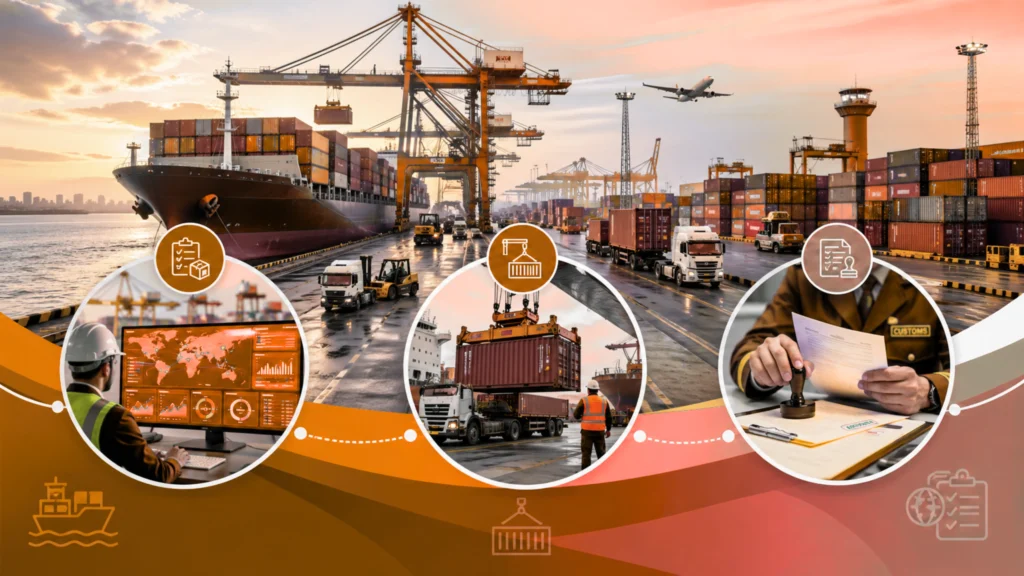
The current state of traditional port operations involves various core operations, such as the following:
1. Logistics Management
Ports are key components of the logistics chain required for the to-and-fro movement of goods. Proper scheduling and communication are of utmost priority to ensure the goods are dispatched and delivered on time.
2. Loading and Unloading
The goods must be loaded and unloaded properly to prevent any discrepancies. There are requirements for cranes and heavy machinery that help ensure the seamless movement of containers. Therefore, items may need to be shipped and stored. Accurate positioning and timely transfer of all containers are important to maintain operational flow.
3. Customs Clearance
When shipping goods internationally, it is crucial to follow customs clearance. Therefore, it must comply with international trade regulations, a key aspect of port operations. This involves customs officials conducting compliance checks and inspections. Each of these tasks can be very time-consuming.
Although these are extremely important, they do pose significant challenges. Some of these challenges include:
- Delays: Congestion is more common than you think. It can result in limited operations, insufficient infrastructure, and high cargo volumes. These delays can further affect the supply chain, leading to increased costs and longer delivery timelines.
- High Labour Cost: Because it is labour-intensive, operational costs also increase. With ports striving to meet the growing trade volume, costs can become unsustainable. Therefore, it becomes challenging to find automated and efficient solutions.
- Inefficiencies: Manual processes and outdated technologies can lead to inefficiencies due to poor coordination between stakeholders and operators. This leads to wasted time and resources, which also affects service delivery.
Is There a Need for Smart Port Optimization?
Yes, and that change is brought through the smart port system. With global trade volumes moving up in a positive direction, digital port transformation is the need of the hour. The upward trajectory is required to optimize the port operations.
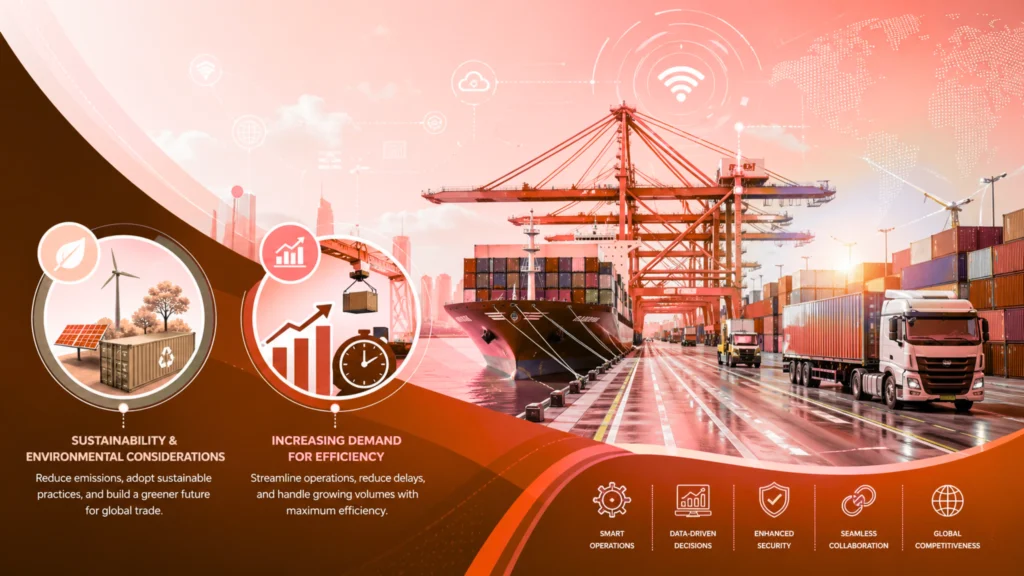
The key factors demanding the requirement of digital port transformation include:
1. Sustainability and Environmental Considerations
The transport and logistics sector is changing significantly and growing under significant pressure to minimize environmental impact. Ports contribute significantly to pollution and gas emissions. Therefore, these face significant scrutiny from stakeholders and regulators.
Integrating sustainable practices is the need of the hour to reduce the carbon footprint of port operations. It helps to comply with the environmental regulations while promoting a greener future.
2. Increasing Demand for Efficiency
With economies expanding, there’s a huge demand for efficiency. Goods passing through ports are also increasing. It is crucial to handle these volumes efficiently to avoid congestion.
Failing to manage the increasing number of shipments can lead to significant delays. It’s crucial to implement measures that streamline cargo processing. It’s also extremely important for maintaining competitiveness in the global market.
With trade operations at a crossroads, the challenges are increasing too. There’s a growing demand for optimization, which can be achieved through advanced technology and automated terminal operations. At the same time, it must be coupled with sustainability to drive innovative solutions.
Embracing technologies such as AI and automation promises the way forward. This plays a key role in ensuring the ports manage their operational capabilities. This helps ensure that modern-day trading demands are met.
What Are the Hurdles for Smart Port Adoption?
With smart ports delivering such great value, there are specific implementation challenges. Some of the key challenges for the adoption of smart port technology are as follows:
- Limited Visibility Across Operations
Port operations require the involvement of multiple stakeholders, systems, and data sources that work in silos. This siloed approach leads to limited real-time visibility for shipping lines, terminals, and customs authorities. Such coordination gaps lead to inefficiencies.
- Safety and Environmental Risk
Handling oil tankers and gas carriers also increases safety risks. In 2025, around three large spills (>700 tonnes) and three medium spills (7-700 tonnes) were recorded. Ensuring safe loading and unloading often needs more than just manual supervision.
- Sustainability and Regulatory Compliance
With sustainability becoming so important, ports must comply with the stringent environmental measures. As per the IMO Net Zero Framework, port decarbonization is important, all while adhering to the Environmental Ship Index standards.
- Capacity and Congestion Pressure
Uneven arrival patterns or mega vessels can create significant pressure on yards and berth connections. While manual planning is efficient, static scheduling in these areas may not be sufficient, especially for adaptation. Excessive delays and congestion can lead to supply chain disruptions.
- Legacy Systems and Workforce Impact
Most ports, even today, rely on legacy systems, which can be difficult to operate on modern platforms. Furthermore, automated terminal operations also change workforce requirements, demanding new operating models and reskilling.
Use of Agentic AI in Port Operations
Agentic AI contributes significantly to the evolution from traditional automation. In smart ports, AI agents and large language models often act autonomously. This helps them make decisions and interpret contracts.
The use of agentic AI helps with automated terminal operations. Some of the top use cases include the following:
Contract Intelligence
The AI technology benchmarks the pricing across contracts and detects any ambiguous language. It alerts stakeholders to potential risks before it is executed.
Virtual Assistant for Port Control Operators
Port control operators have to deal with a lot. The AI agents often act as real-time virtual assistants, helping operators troubleshoot alarms, resolve operational issues, or identify anomalies. Fast operations help in faster resolution, especially for live port operations.
Charter Party Interpretation
AI agents can easily extract crucial clauses from charter party agreements, flag the exceptions, and eventually generate voltage orders. It reduces manual review effort while minimizing contractual disputes.
Claims Management
Agentic AI technology plays a key role in claims processing and settlements. It analyses important voyage data and detects any discrepancies or disrupted charges. Each helps reduce turnaround time while offering faster resolution.
Digital Twins for Optimization and Simulation
A key smart port technology, Digital Twins, is the foundation for all smart port operations. It creates live virtual replicas of the port, including container layouts, yard operations, vessel movements, and environmental conditions.
Digital Twins help the ports with the following:
- Testing process improvement without disrupting live operations.
- Increasing operational efficiency and planning accuracy.
- Simulating container yard layouts and stacking strategies.
- Analyzing operational scenarios before execution.
The simulations using digital twin technology help identify bottlenecks and improve workflows. Furthermore, it boosts process efficiency, improving operations across terminals and yards. The combination of Digital Twins technology, IoT, and AI helps ports continuously optimize operations. Therefore, it contributes significantly to digital port transformation.
What’s the Use of IoT in Portsport 4.0?
Digitization and the integration of new technologies are driving a revolution in the port world. Each of these helps optimize the loading and unloading of goods. These technologies help improve operational efficiency while enhancing the capacity to manage large volumes of cargo.
By improving sustainability and efficiency, IoT in Portsport 4.0 offers a wide range of advantages for the supply chain industry. Some of the key benefits are as follows:
- Increased Safety: Port digitization can play an important role in enhancing safety. The integration of threat detection technologies, enabled by data analysis and AI, can significantly reduce security risks.
- Greater Sustainability: Ports 4.0 helps improve supply chain sustainability. Energy efficiency and automation can help lower greenhouse gas emissions and reduce the environmental impact of port operations.
- Better Service Quality: Customers expect nothing less than the best quality service. The digitization of ports can significantly improve service quality. The different technologies help to lower errors while preventing delivery inaccuracy.
- Efficiency: The advanced technologies in Portsport 4.0 significantly improve operational efficiency. Automated terminal operations regarding loading and unloading reduced vessel waiting time and improved supply chain efficiency.
Benefits of Smart Ports
As smart ports become increasingly popular, authorities around the world are adopting this transformation. The impact of this transformation extends beyond traditional logistics systems.
Some of the key benefits of Smart port technology integration are as follows:
- It improves terminal throughput and reduces vessel turnaround time.
- The Port authorities are aligned with meeting decarbonization and sustainability goals.
- Compared with previous years, asset utilization has improved while maintaining low operational costs.
- Proper hinterland coordination and a decrease in congestion around the ports.
- The integration of AI-driven logistics optimization and automation has played a key role in streamlining logistics and lowering costs.
- Regulatory compliance has increased while ensuring transparency and safety.
Sustainability- The Core Concept of Smart Ports
Digital port transformation has contributed significantly to sustainability. For smart ports, sustainability is no longer optional, but crucial. Here are some of the core concepts helping smart ports cater to sustainability:
Port Decarbonization
This is crucial for meeting the IMO Net Zero Framework and cutting greenhouse gas emissions across shipping. Smart ports have been reducing emissions by reducing vessel idle time, enabling proper use of shore power, and optimizing berth allocation. These measures help to improve energy efficiency across all terminal operators.
Safety Engineering
Smart ports have integrated advanced safety measures to manage risks associated with oil tankers and gas carriers. Real-time monitors, predictive analytics, and automated alerts significantly boost emergency response. This has a key role in improving accident prevention.
Environmental Monitoring
The Environmental Ship Index is often considered the benchmark that all smart ports must meet. Drones and IoT in Portsport 4.0 help monitor air and water quality, detect pollution risks, and manage environmental impact through real-time analytics.
Future Trends for Smart Ports to Watch Out For
With Smart Port Technology being adopted at such a high rate, it is only expected to grow further. Some of the key trends for smart ports to watch out for in the future are as follows:
- Agentic AI will be used at scale to underscore the need for autonomous decision-making.
- Regional collaboration across ports will be promoted to boost trade continuity and resilience.
- Smart shipping solutions are likely to be deeply integrated across the supply chain.
- The adoption of expanded twin technology will increase for prescriptive and predictive information.
To streamline port operations, there will be increased focus on zero-emissions, alternative fuels, and green corridors.
Each of these advanced technologies will pave the way for the next digital transformation in shipping. The integration of technology only contributes to meeting the long-term goals. At the same time, it plays a key role in streamlining operations across all departments. This helps businesses stay aligned and be compliant to all measures and regulations.
Conclusion
Port authorities, terminal operators, and logistics providers need to navigate the challenges of digital adoption for smart ports. It’s extremely crucial to partner with experts who drive a collaborative system approach.
AI-driven solutions and strategic partnerships will help leverage data analytics, cybersecurity, and agentic AI. All these key technologies will help build the “brain” for a smart port. Scalable AI agents and a secure cloud environment are crucial for integration across niche operational technologies.
Experts help deliver safe, secure end-to-end solutions to meet the unique demands of maritime ecosystems. It is crucial to partner with experts who understand the workings and can help in integrating the same. This drives efficiency and caters to timely resolutions.
