

Global trade is now a lot bigger and more connected than in the past. But this has made things somewhat difficult for logistics companies. International freight forwarding is difficult for businesses today because of things such as rules and regulations, an increase in cost, and unplanned problems. When supply chains go through various countries, even little mistakes can cause delays and cost huge money.
We talk about the most common problems that come up in international freight forwarding and, more importantly, how to solve them in this blog.
Key Takeaways
- International freight forwarding involves complex regulations that vary across countries.
- Customs delays and documentation errors are major causes of shipment disruptions.
- Freight rate volatility and supply chain disruptions impact profitability and timelines.
- Ocean and air freight both face capacity and delay challenges.
- Real-time visibility is critical for efficient logistics management.
- Risk management and contingency planning are essential in global logistics.
- Technology and automation are key to solving modern freight challenges.
- Businesses that adopt digital tools can scale faster and reduce operational risks.
Understanding Global Freight Forwarding Ecosystem
There is a lot more to managing international shipments than just moving things from one country to another. Customs officials, warehouses, ports, and regulatory bodies work in sync in various parts of the world to make up the global freight forwarding ecosystem. Several businesses have problems with cross-border freight because the structure links to other parts. This is true when people must work together.
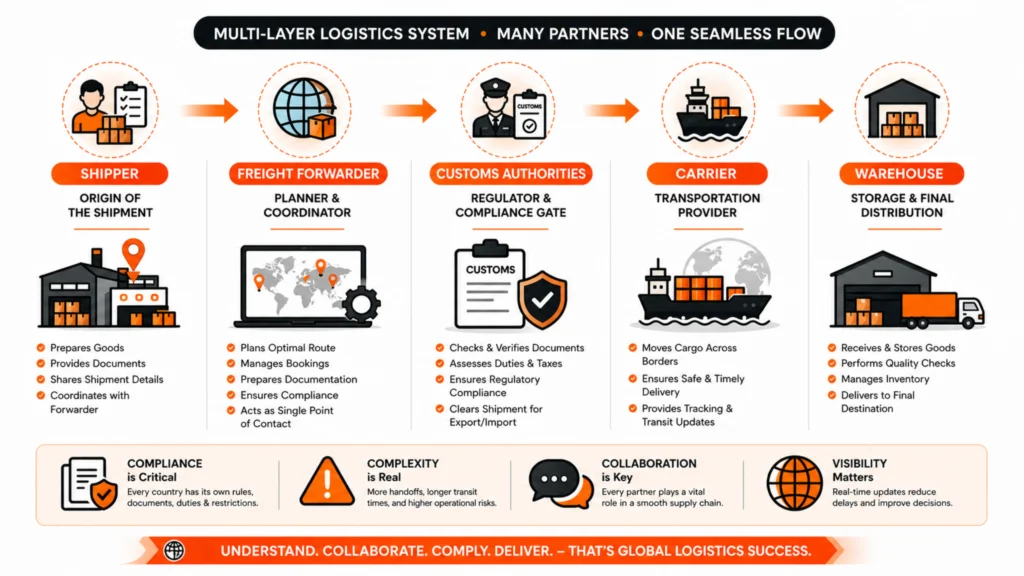
It is very important for freight forwarders to follow the rules for international trade, as each country has its own set of rules, documentation standards, and compliance requirements. Businesses need to ensure that every shipment obeys the laws of both the country of origin and the country of destination. This includes tariffs and duties, goods that aren’t allowed, and license requirements. Even small compliance problems can lead to delays, fines, and shipment rejections.
International freight forwarding is way more complex compared to domestic logistics. This is because there are more handoffs, longer transit times, and higher risks. It’s usually difficult to figure out because of infrastructure, communication, and service standards that vary from one region to another region.
So businesses must have a proper understanding of the global logistics ecosystem if they want to handle international shipments properly and reduce operational risks at the same time.
Top Global Logistics Challenges in International Freight Forwarding
Let us look at the most common challenges that come up with international freight forwarding and how companies are trying to solve these issues:
Challenge 1: Complex International Shipping Regulations & Compliance
One of the most difficult things about international freight forwarding is keeping up with the changing rules in every country. Each area has its own set of rules about what can be imported and exported, the costs involved, what goods are not allowed, and how they must be followed. It is difficult to keep track of international shipping rules on a large scale. This is because what works in one country might not be regulated or can be limited in another country.
The entire process gets a lot more complicated when shipments go through more than one country. Each one needs to complete its paperwork and compliance checks. Trade policy changes and tariff restructuring happen all the time. The rapid pace of change makes it difficult for businesses to keep up with the new rules and regulations. Even a small breach of compliance, such as incorrect classification, incorrect product, or lack of permits, can result in shipments being held up or even rejected at borders.
To deal with the issue of regulatory compliance, companies must buy compliance tracking systems that give them real-time updates on regulations. Automation tools can help ensure that the paperwork is up to date with the latest rules. Also, skilled customs brokers can help businesses understand the rules and reduce any sort of risks involved.
Challenge 2: Customs Clearance Delays in International Shipping
Customs clearance delays in the case of international shipping are a very common issue that can disrupt global logistics operations. Every shipment needs to go through customs checks, and any inconsistency in documentation, product classification, or declared value can lead to delays. Security checks, approvals, and inspections from several authorities helps to slow down the entire process over time.
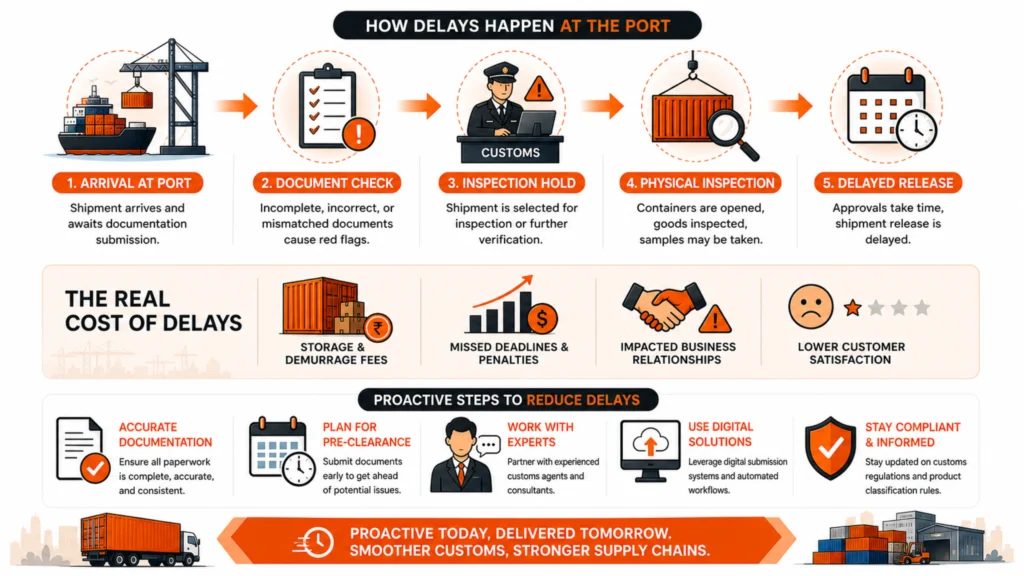
Such delays push back deliveries and also increase costs by charging for storage, demurrage, and missed deadlines. In spaces that need to get things done fast, little delays can also hurt business relationships as well as customer satisfaction. To reduce delays you will need to be proactive. Ensure that all paperwork is complete and accurate; planning for pre-clearance whenever possible and working closely with customs agents can help improve efficiency. Digital submission systems and automated workflows help to get approvals quicker and reduce mistakes made by hand.
Challenge 3: Freight Documentation Errors & Paperwork Complexity
International shipping involves a lot of paperwork, such as dealing with invoices, bills, certificates, packing lists, and whatnot. If you handle all of this manually, you will always have a chance of making mistakes. Even small mistakes, like providing incorrect shipment information, mismatched data across documents, or incorrect signatures, can cause further delays, fines, or even rejections. When there are many stakeholders, each with their own requirements for documentation formats and standards, things get more complicated.
To deal with the problem of data entry and verification, companies are using digital documentation systems that enter and check data by themselves. Putting in place regular checks before submission and standardizing processes can reduce mistakes further. Companies can improve accuracy, speed up processing, and avoid costly disruptions by reducing the amount of work they need to do manually.
Challenge 4: Global Supply Chain Disruptions
Global supply chain disruptions have become more frequent due to geopolitical tensions, natural disasters, pandemics, and trade restrictions. All of these disruptions can impact shipping routes, port operations, and carrier availability. This leads to delays as well as a rise in costs.
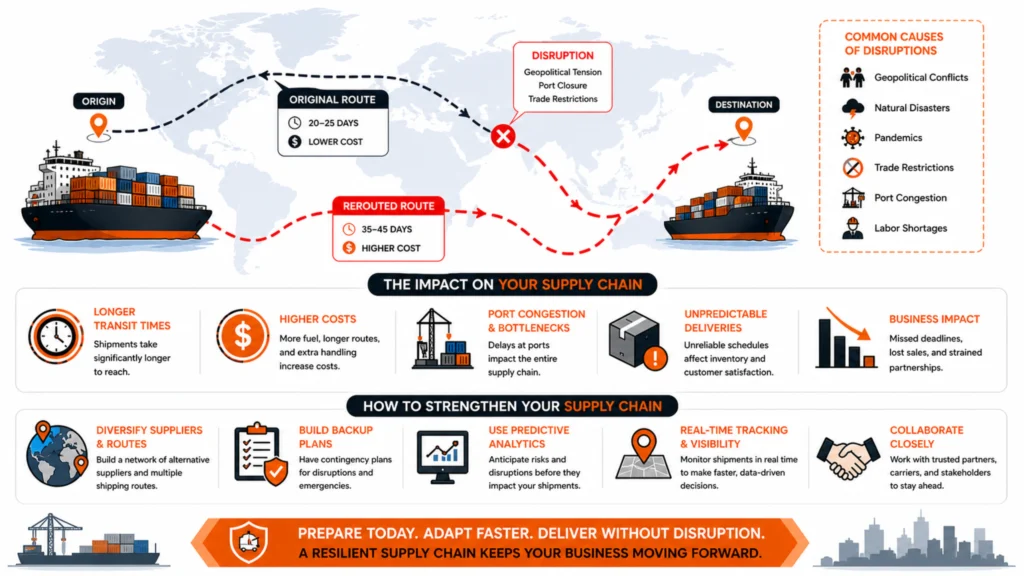
For instance, when there are problems related to trade routes, shipments may have to be rerouted. This process can take way longer and cost a lot more fuel. Similarly, port congestion or lack of workers can cause bottlenecks that, in turn, affect the entire supply chain.
To tackle such risks, companies have to strengthen their supply chain with the help of a variety of suppliers and shipping routes as well as backup plans. Companies can better prepare for problems and handle them when they happen with the help of predictive analytics along with real-time tracking.
Challenge 5: Freight Rate Volatility & Rising Costs
Freight rates are not stable because of the change in global demand, prices of fuel, and supply constraints. All of these factors make it difficult for businesses to predict costs. This instability has an effect on the profit margin of companies, especially those that are trying to stay within budgets.
Freight rates can increase quickly because of the changes in weather, politics, and lack of space. But changes in currencies add another level of financial risk to doing business across borders.
Businesses should use flexible pricing strategies and work out long-term contracts with carriers to keep costs down. You can also reduce costs by optimizing routes and combining shipments. Companies can be profitable even when the market changes by focusing on the reduction of prices.
Challenge 6: Ocean Freight Challenges (Capacity & Delays)
Ocean freight is a fantastic way to ship goods from one country to another. However, it comes with its own challenges. Some problems include crowded ports, lack of containers, and longer transit times. When demand is high and capacity is insufficient, delays and cost increases can occur.
Once ports are crowded, ships might have to wait before they can unload. Such a delay can throw off schedules all across the supply chain. Not having proper containers makes things difficult. This is especially true during busy hours.
To avoid all such problems, companies need to plan their shipments well ahead of time and reserve container space quite early. Looking into other routes and ports helps to avoid crowded spaces and reduce wait times.
Challenge 7: Air Freight Bottlenecks & Capacity Issues
Air freight is often used for shipments that need to get there quickly, but delays can be very problematic. High demand, limited cargo space, and prioritizing certain shipments can all lead to delays and increased costs.
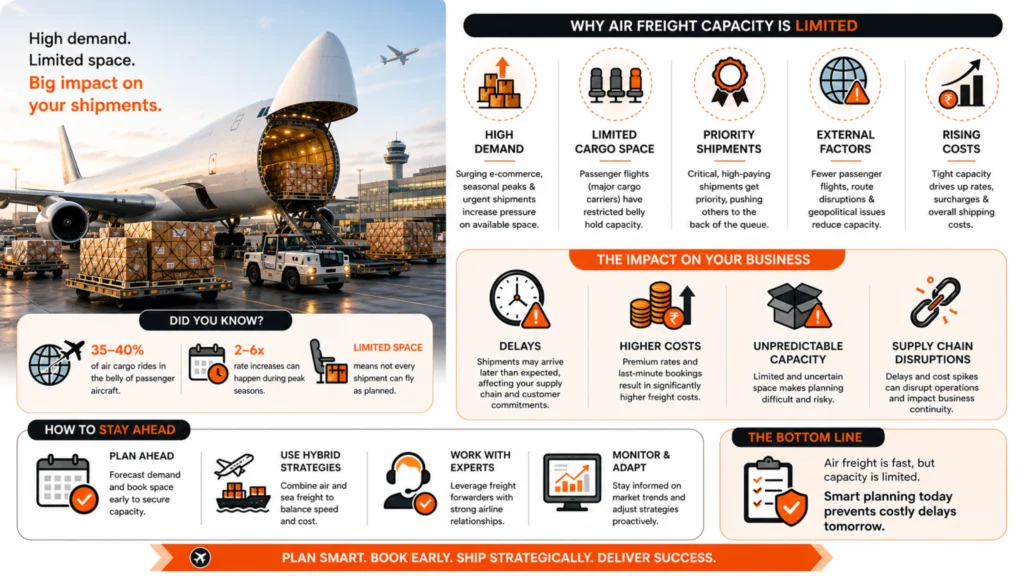
External factors, like fewer passenger flights that usually carry cargo, can also change how much freight airlines can send by air. This is taking away more space and driving prices up.
To deal with these problems, companies should plan their shipments ahead of time and reserve space early. Using both air and sea freight strategies together can also help logistics operations run more smoothly by finding a good balance between speed and cost.
Challenge 8: Lack of Real-Time Visibility & Tracking
One big problem with global logistics is that it’s challenging to see all shipments at once. Businesses can’t monitor progress, identify delays, or respond quickly to problems if they can’t keep accurate records.
This lack of visibility can make it difficult to communicate, waste time, and lead to a poor customer experience. It also makes it challenging to keep track of inventory and plan operations well.
Tracking systems and digital logistics platforms that work with the Internet of Things (IoT) can make things much easier to see. Businesses can make better decisions, work together more efficiently, and give better customer service with real-time data.
Challenge 9: International Logistics Risk Management
An important part of international logistics is managing risks. Dealing with problems like cargo damage, theft, delays, and financial losses is part of international logistics risk management. These risks can happen at any point in the supply chain, from moving the goods to storing them.
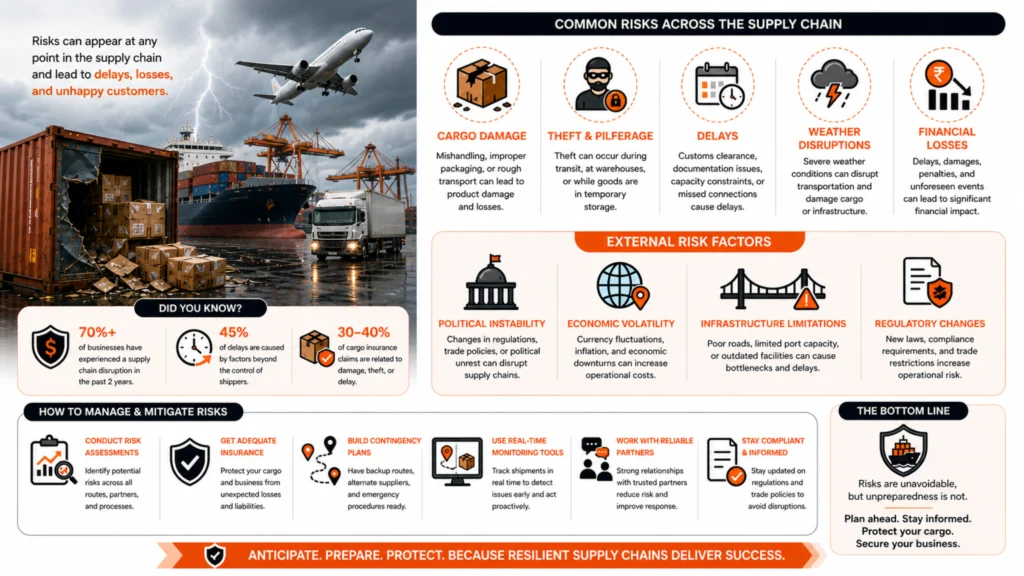
Outside factors like unstable governments, bad weather, and limited infrastructure make the level of risk even higher. If they do not plan for these risks properly, they can cause big problems with operations and finances.
To lower their risks, businesses should do risk assessments on a regular basis and buy insurance. Creating backup plans and using monitoring tools can also help find problems early and lessen their effects.
Challenge 10: Slow Adoption of Freight Forwarding Technology
Many businesses still use old systems even though there are more modern tools available, which wastes time and money. There aren’t enough freight forwarding technology solutions, which makes it harder to grow and makes things take longer.
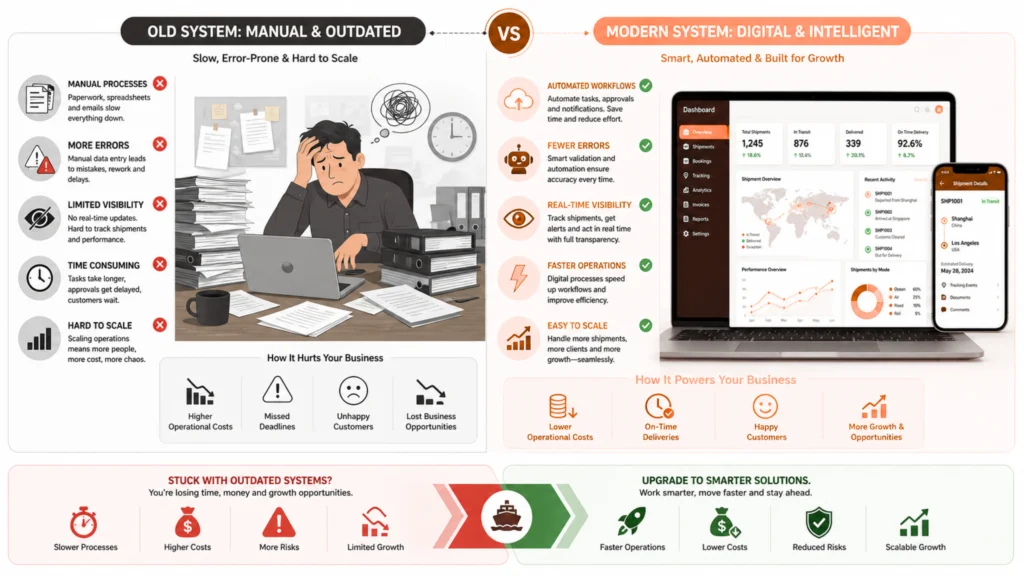
Manual processes increase mistakes, obscure visibility, and limit shipment handling. This situation can hurt businesses in a market where there is a lot of competition.
Nowadays tech, like AI-run systems, automation tools, and cloud-based platforms, can change how people do things. It is easier to do work with these solutions, and they help businesses grow while still staying competitive.
How is Technology Solving International Freight Challenges?
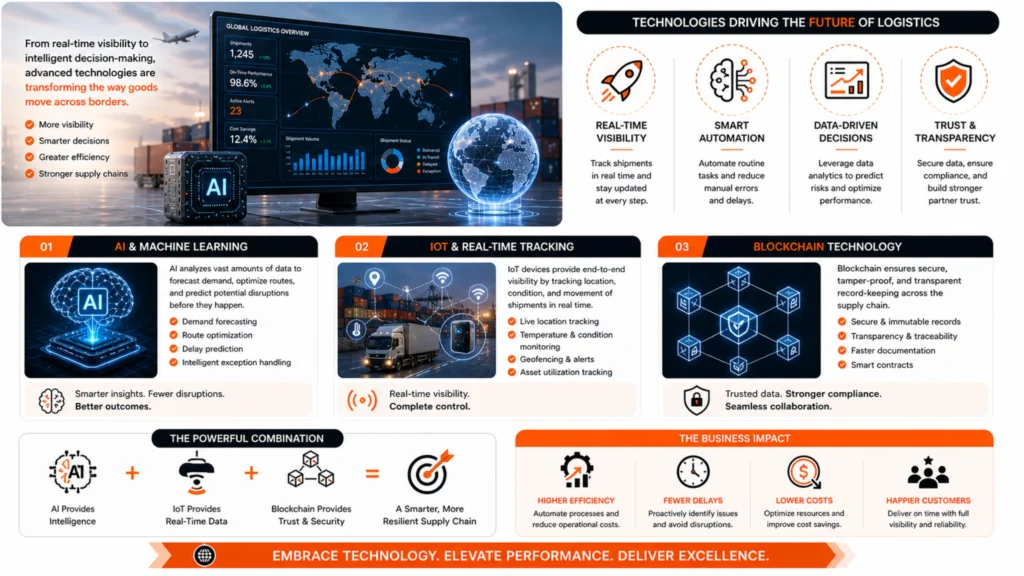
Here is how technology can solve international freight challenges:
Real-Time Tracking & Visibility
Technology makes real-time shipment tracking a major improvement. Businesses can track cargo throughout its journey with IoT devices and platforms. This reduces uncertainty, identifies delays early, and speeds up response, improving efficiency and customer communication.
Automation in Documentation & Compliance
International paperwork often delays and becomes inaccurate when done manually. Automation tools generate, verify, and submit documents digitally, simplifying the process. This speeds up customs clearance and reduces errors, making complex international shipping regulations easier to follow.
AI & Predictive Analytics
Freight forwarders can become proactive with AI. AI can predict delays, find the best routes, and improve cost management by analyzing massive data sets. Enhanced decision-making helps businesses make better choices and solve problems.
Blockchain for Transparency & Security
Blockchain is improving global logistics trust and transparency. The safe, unchangeable records of transactions and shipment data reduce fraud and ensure everyone has accurate data.
Integrated Digital Platforms
One platform connects all parties, tracks shipments, and manages data in real time. Coordination improves, communication issues decrease, and businesses grow more efficiently. Technology is improving freight and making international logistics faster, more reliable, and easier to scale.
Conclusion
International freight forwarding becomes more difficult as global trade grows due to operational, regulatory, and cost issues. If not managed properly, these issues can affect how well things work and how much money you make, from following the rules and bad paperwork to supply chain and space issues.
Proactive companies can profit from these issues. Freight forwarders can reduce uncertainty and improve operations by using the right technology, processes, and risk management. Digital tools and automation are crucial for open, efficient, and scalable global logistics.
Companies must adapt to industry changes. In a competitive global market, efficient, resilient, and innovative companies can better handle international freight challenges and grow over time.
FAQs
What are the biggest international freight forwarding challenges?
The biggest international freight forwarding challenges include complex regulations, customs delays, documentation errors, supply chain disruptions, and fluctuating freight costs.
Why do customs clearance delays happen in international shipping?
Customs delays usually happen due to incomplete or incorrect documentation, inspections, regulatory checks, or lack of proper compliance with country-specific rules.
How can freight documentation errors be reduced?
Freight documentation errors can be reduced by using digital tools, automating paperwork, standardizing processes, and conducting regular checks before submission.
What causes freight rate volatility?
Freight rate volatility is mainly caused by fuel price fluctuations, changes in demand and supply, geopolitical issues, and global economic conditions.
How do global supply chain disruptions affect logistics?
Global supply chain disruptions lead to shipment delays, increased costs, route changes, and reduced reliability in delivery timelines.
How can technology improve international freight forwarding?
Technology improves freight forwarding by enabling real-time tracking, automating documentation, enhancing visibility, and helping businesses make faster, data-driven decisions.
What is international logistics risk management?
It involves identifying and managing risks such as cargo damage, delays, theft, and financial losses through planning, insurance, and monitoring systems.
What are common ocean and air freight challenges?
Ocean freight faces issues like port congestion and container shortages, while air freight deals with limited capacity, high costs, and scheduling constraints.
