

The global logistics industry is growing rapidly because of rising international trade, growing e-commerce, and more and more people who want shipping that is faster and more reliable. In this market, companies that want to stay competitive and take advantage of new opportunities need to know how to grow their freight forwarding business. It is not enough to handle shipments, as one needs to build something that can handle higher volumes without hurting profits or efficiency.
In this guide, we are going to look at three key areas for scaling freight forwarding businesses.
Key Takeaways
- Scaling a freight forwarding business is about efficiency, not just expansion.
- Strong operations and SOPs are the foundation of sustainable growth.
- Automation tools and CRM systems help reduce manual work and improve accuracy.
- Strategic expansion and partnerships enable market growth without heavy investment.
- Revenue growth depends on value-added services and smart pricing strategies.
- Digital transformation is essential for real-time visibility and scalability.
- Addressing challenges like cash flow and bottlenecks early ensures smooth scaling.
Understanding Logistics Business Scalability
Scaling a logistics company needs to have a system that can tackle the growth without any rise in cost or complexity. So, in this case, business scalability is crucial. A scalable freight forwarding company can meet demand, enter markets, and improve service while maintaining efficiency at the same time.
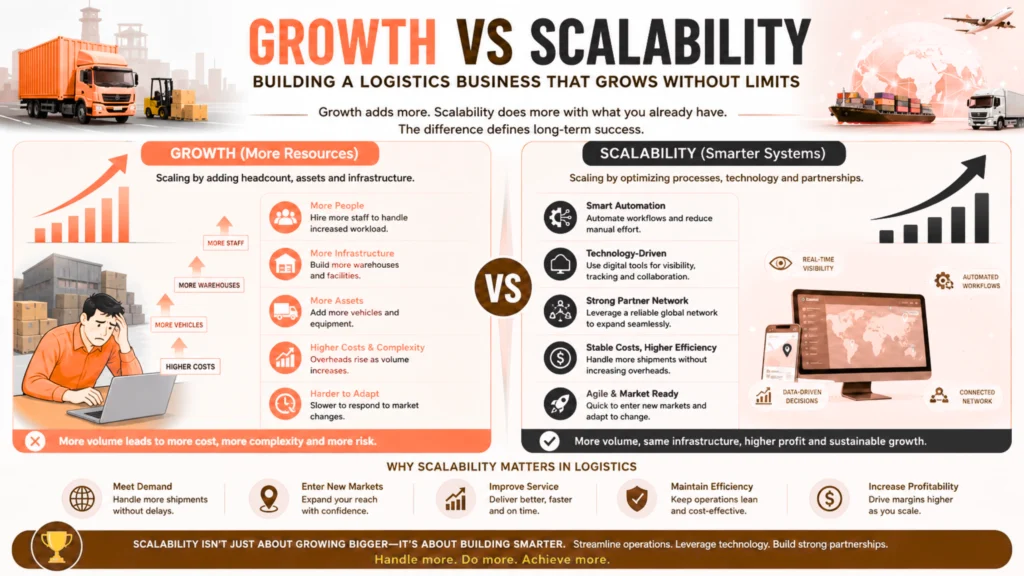
In freight forwarder business development, we must distinguish between growth and scalability. To meet demand, companies often need to hire more staff, build more warehouses, and acquire more vehicles. Scalability optimizes processes and uses technology to help the business grow without any rise in overheads. Businesses that expand successfully are quite different from the ones that struggle a lot with inefficiencies.
Scalability means handling more shipments with the same infrastructure, keeping delivery dates, and making money as volume keeps increasing. Companies grow sustainably and compete in the logistics world. This changes quickly by streamlining the operations with the help of digital tools and building a strong network of partners.
Build a Strong Operational Foundation
Scalable freight forwarding is based on well-organized operations. It takes longer, costs more, and is less efficient to grow without a solid base. To make scaling happen, operational efficiency and logistics are necessary. A clear, standardized process ensures that we tackle shipments the same way, no matter how big or complicated they are.
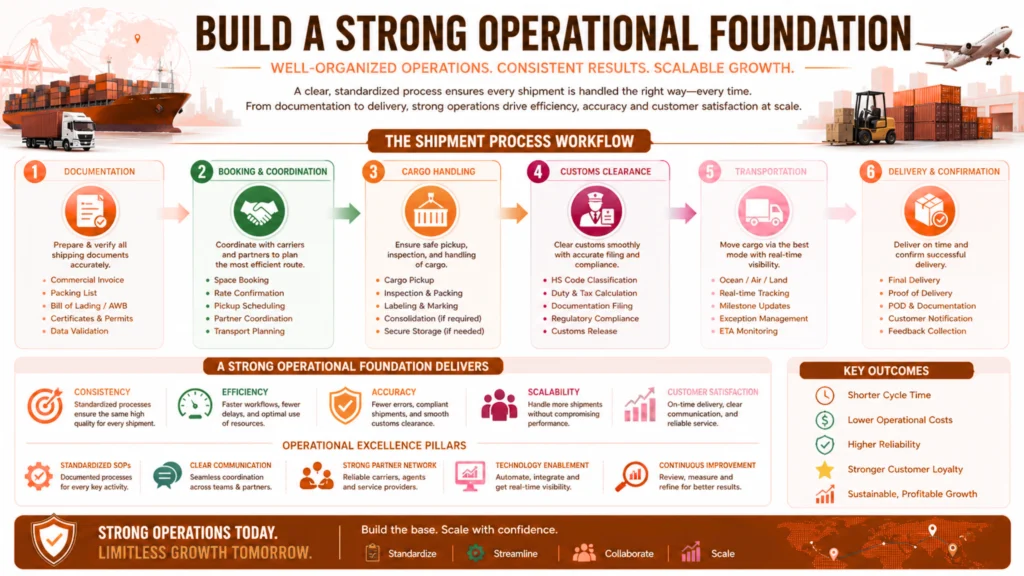
SOPs for handling paperwork, customs, coordinating with carriers, and managing deliveries help to cut down on mistakes and speed up the process. Teamwork is faster and a lot more accurate when workflows are smooth and clear. This approach makes service better and reduces the need for manual work, which can slow the growth of a business.
For a logistics company to grow, it is essential that it takes care of its operations and finds places where time and resources are always wasted. Streamlining of departmental communication, helping cut down on unnecessary steps, and improving partner coordination can all help make things run easily. A strong operational base allows companies to grow without affecting their performance or customer satisfaction as the number of shipments keeps increasing.
Invest in Freight Forwarding Automation Tools
Technology, not just people, is needed for scaling to work well. Freight forwarding automation tools make things faster, more accurate, and more consistent. Manual tasks such as paperwork and planning often lead to mistakes as well as delays that can get difficult to handle as shipments increase.
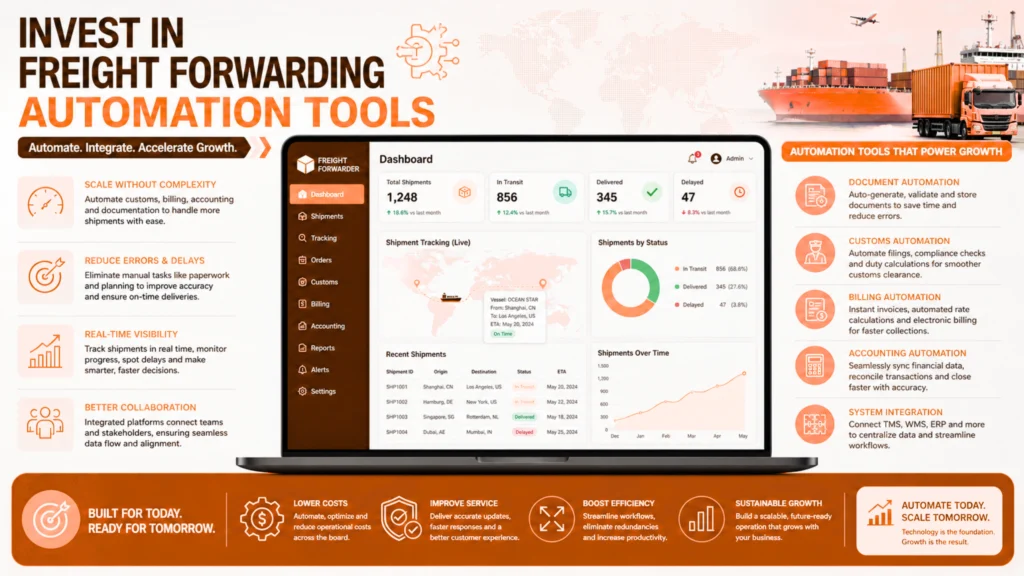
It is possible to do customs, billing, and accounting automatically. By reducing manual work, it is possible for businesses to handle loads of work without any complexity. With digital freight forwarding, companies can be more flexible and increase their control.
There are several modern automation tools that allow teams to see shipments in real time, so it is possible to track progress, spot delays and make decisions easily. Once platforms integrate, departments and other stakeholders find it much easier to share data. This feature makes it easy to work together and avoid any sort of confusion. This is exactly how freight forwarders can improve service, cut down on costs, and build a system that can help grow the business in the long term.
Leverage Freight Forwarding CRM Software
The relationships freight forwarders have with their clients get more complicated as they grow. This is why freight forwarding CRM software is important. An effective CRM system organizes information about clients, keeps track of interactions, and makes it easier for sales and operations to talk to each other, which stops mistakes.
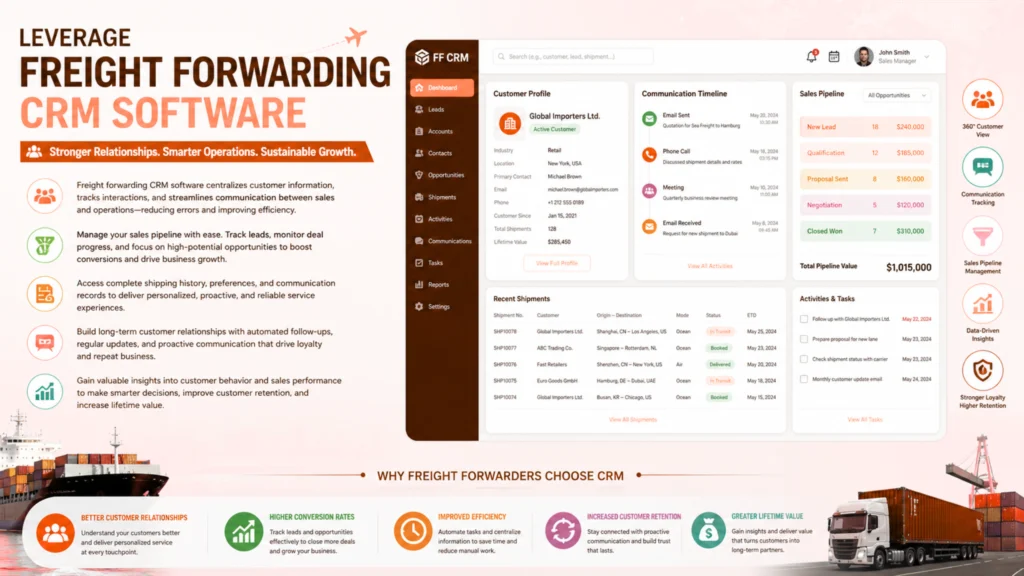
With the help of CRM tools, you can manage your sales pipeline easily. It is possible to keep track of leads and deal progress as well as bigger opportunities. This leads to better conversions and growth for freight forwarders. Once you keep track of shipping history, preferences, and communications, it helps you provide them with better, personalized services easily.
CRM systems help keep customers after the sale is over. In the logistics market, which is very competitive, long-term relationships are built through automated follow-ups, regular updates, and proactive communication. Freight forwarding companies can get more repeat business, lifetime value, and efficiency by being able to see more about how their customers act and how well they’re selling.
Expand Logistics Operations Strategically
Freight forwarders must plan the way they want their business to grow in order to make the most of new markets and growth opportunities. Instead of growing quickly, companies that do well go to places where there is an increase in demand and it is possible to run a business. This method grows the freight forwarding market in a way that does not waste your resources at all.
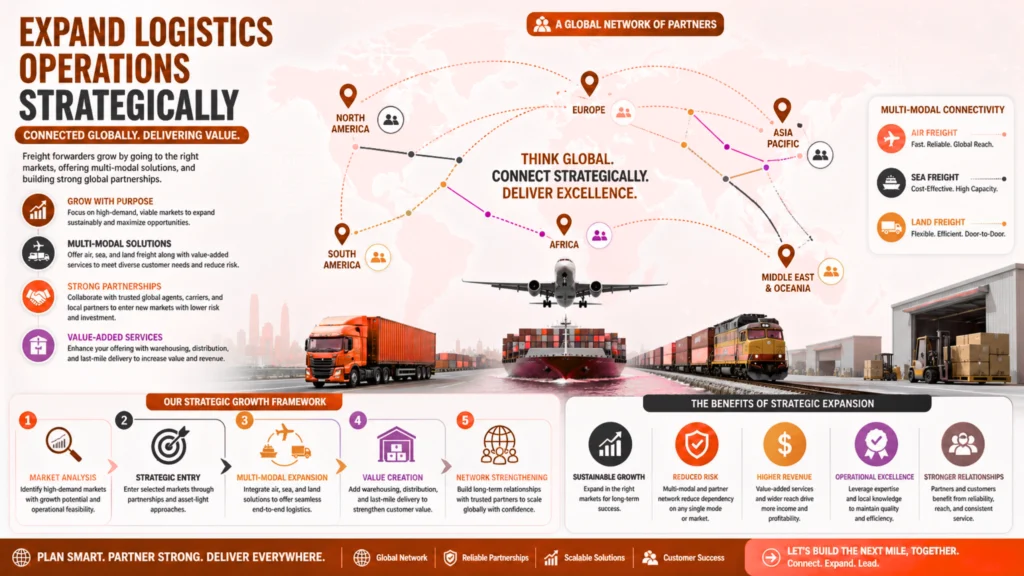
Key is to offer a wider range of services by adding freight by air, sea, and land. This gives you more services to offer and makes your business less vulnerable to problems with a single mode. You can easily increase the value and income by adding warehousing, distribution, or last-mile delivery at any time.
Another important thing is to build a strong network of global partners. Working with trustworthy agents, carriers, and local logistics companies is a good way to get into new markets without spending a lot of money. Strategic partnerships are very useful. They help people access services, reduce risks, and enter markets easily. With the proper plan, freight forwarders can rise without affecting quality or even losing control.
Improve Freight Forwarding Revenue Growth
To grow a freight forwarding business, you need to make each shipment more profitable, not just more of them. The increase in freight forwarding revenue ensures that margins stay high as operations grow and do not decline even as costs keep rising. Services, pricing and customer value need to be planned out well to make the desired outcome happen.
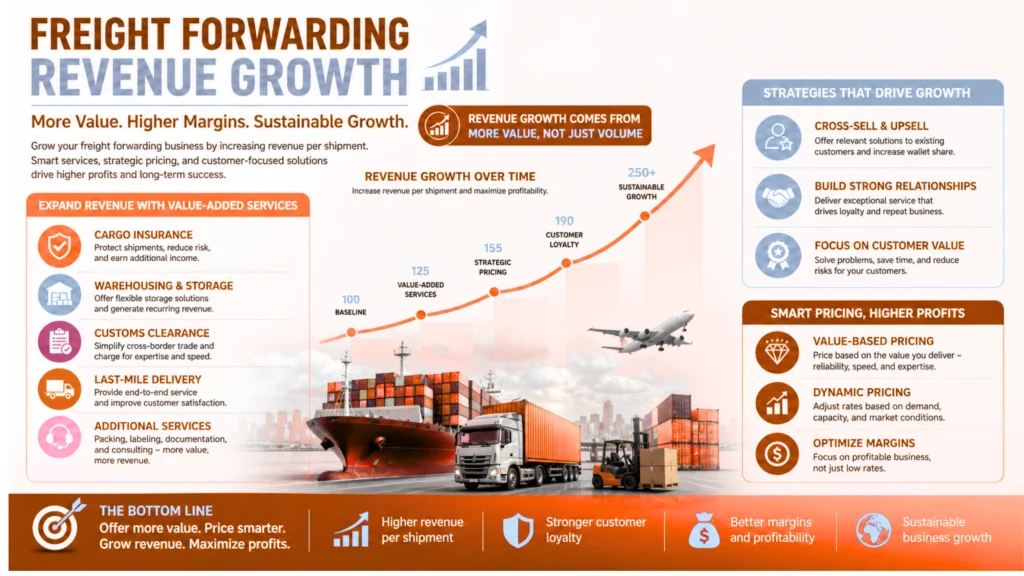
You can make more money by providing cargo insurance, storage, help with clearing customs, and last-mile delivery. All of these services make customers happier, generate revenue, and do not complicate operations. Cross-selling and upselling to current customers can bring in more money and help you build relationships with them.
A pricing strategy is also important. Instead of low rates, freight forwarders should use value-based pricing to show how exceptional their service is, how reliable it is, and how fast it is. Profits can go up with dynamic pricing models that change based on demand and market conditions. Businesses can grow sustainably and make the most money when they set prices correctly and offer a wide range of services.
Strengthen Business Development & Sales
To grow, a freight forwarding business needs a reliable sales engine. Freight forwarders need to do more than just get new clients to grow their businesses. They also need to build long-term relationships with existing clients that lead to repeat business and steady income. Structured sales processes help logistics companies grow in markets that are already very competitive.
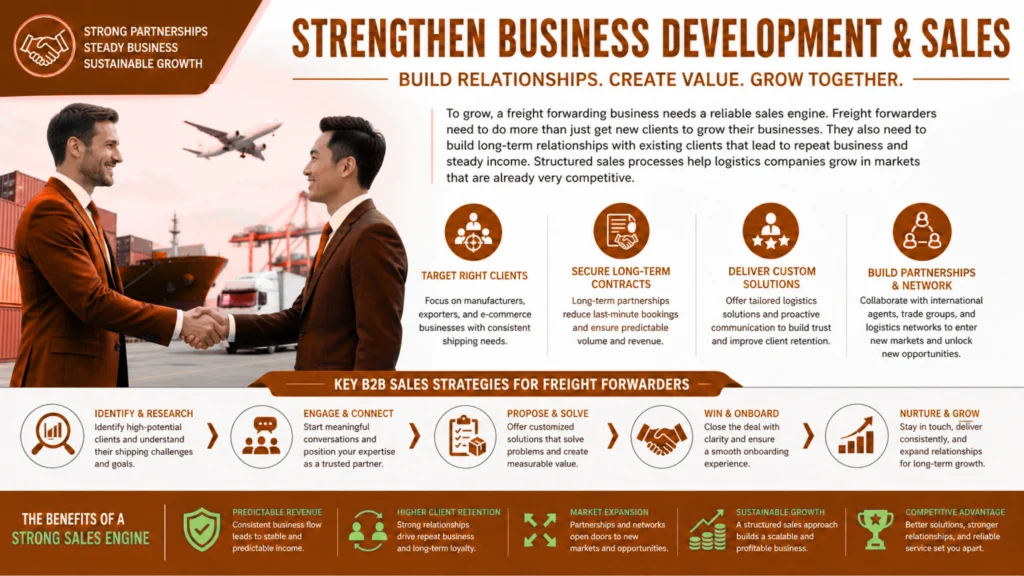
A key B2B sales strategy is to go after manufacturers, exporters, and e-commerce businesses that need to ship things all the time. Long-term contracts with these clients cut down on last-minute bookings and make sure that volume is always predictable. Offering custom solutions and staying in touch with clients on a regular basis helps build trust and keep them as clients.
Partnerships and networking are also important for business growth. New markets can be reached by joining forces with international agents, trade groups, and logistics networks. Active sales and relationship-based engagement can help freight forwarders find steady business opportunities and grow their company.
Understand Freight Broker vs Freight Forwarder
If you want to grow your logistics business, you need to understand the difference between a freight broker and a freight forwarder. This will affect how you run your business and how you plan to grow it. Both help with shipping, but their roles and benefits are different.
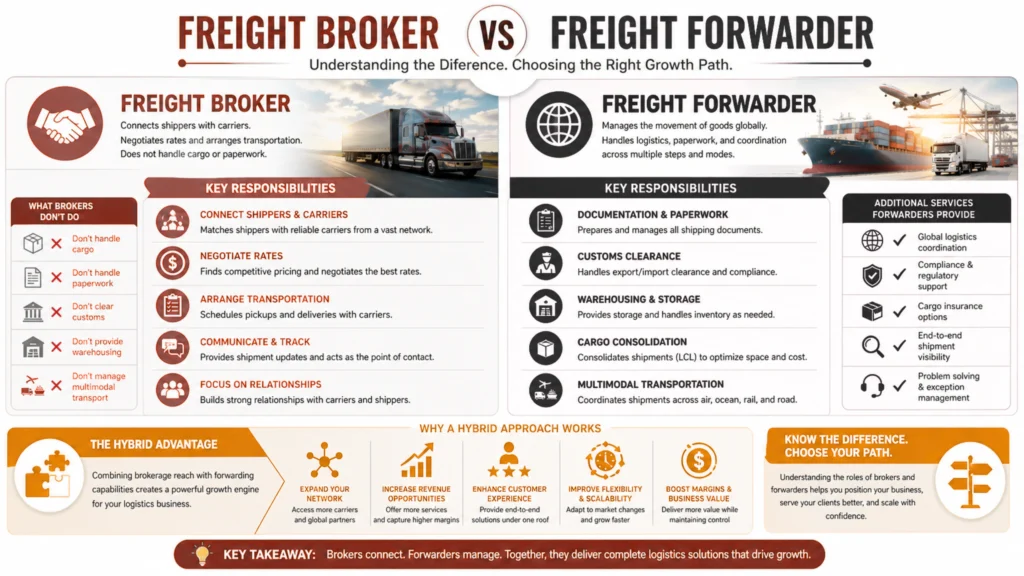
Freight brokers connect shippers with carriers. Usually, they connect companies with shipping companies, negotiate prices, and set up deliveries. Brokers don’t usually handle cargo or fill out paperwork. Freight forwarders take care of paperwork, clearing customs, storing, combining cargo, and coordinating between different types of transportation.
Scaling businesses may benefit from a hybrid approach. Brokerage services allow freight forwarders to expand their network and offer more flexible solutions while maintaining logistics control. This lets companies boost service coverage, margins, and client customization without complicating operations. Knowing the difference helps you position your business and choose the right growth path.
Focus on Digital Transformation for Scaling
To scale up in modern logistics, you need more than just better operations. Freight forwarding needs to be transformed digitally. As shipment volumes rise and supply chains get more complicated, growth can be slowed down by manual processes or systems that don’t talk to each other. With digital transformation, businesses can make decisions faster based on data, streamline their operations, and see more clearly.
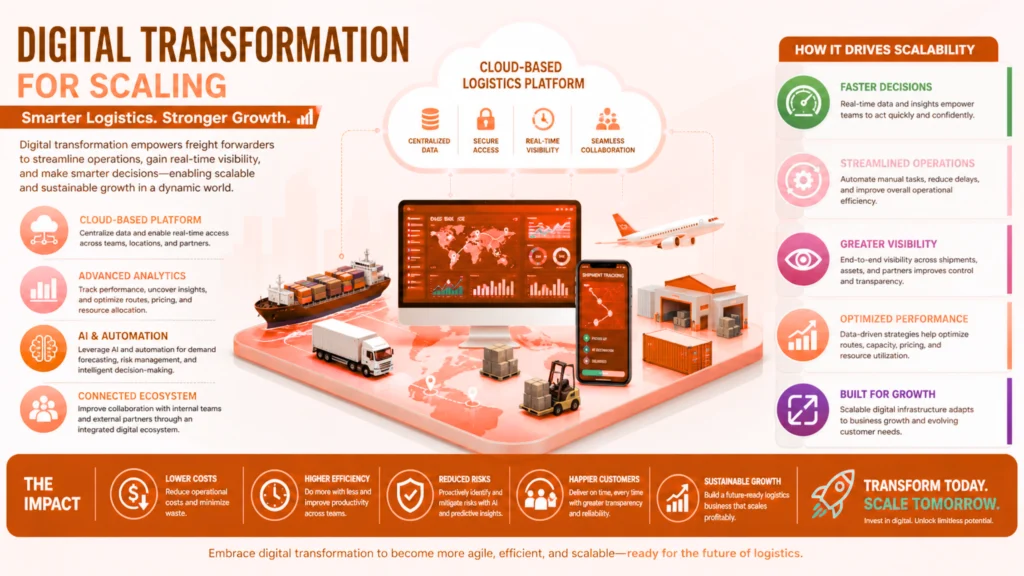
Centralizing data and enabling real-time access across teams and locations, cloud-based logistics platforms are crucial. Departments and external partners work better together, reducing delays and communication issues. Meanwhile, advanced analytics tools help businesses track performance, identify inefficiencies, and optimize routes, pricing, and resource allocation.
Predictive planning and smarter decision-making with AI and automation improve scalability. From demand forecasting to risk management, these technologies help freight forwarders be proactive. Logistics companies can become more agile, efficient, and scalable for long-term growth by investing in digital capabilities.
Overcome Common Scaling Challenges
Growing businesses often face practical challenges that can slow their growth if they do not address them early. The right logistics company scaling tips can help freight forwarders overcome these industry-wide challenges without sacrificing performance.
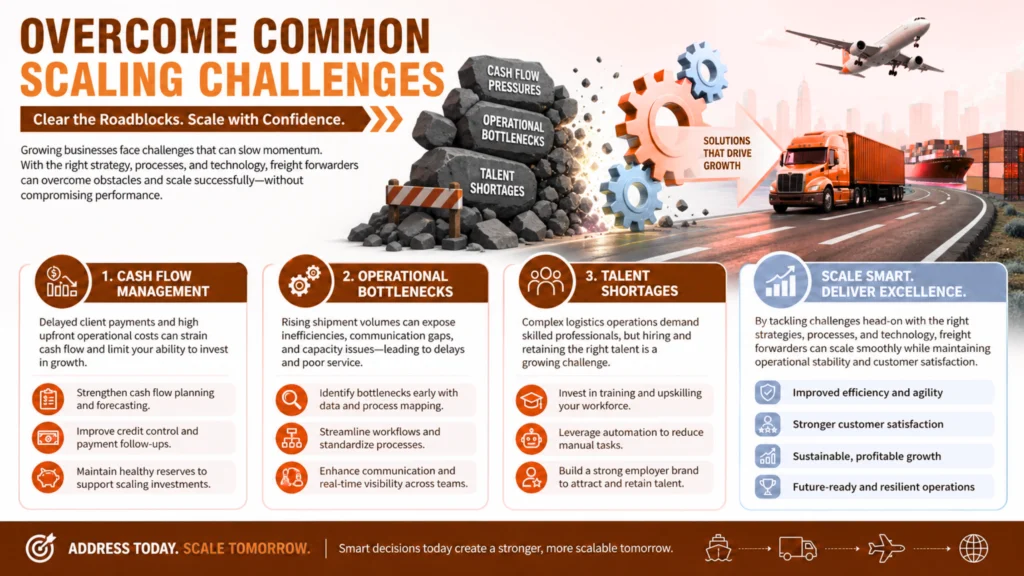
Cash flow management is a major issue. If revenue cycles are off, scaling operations requires investment in technology, infrastructure, and talent, which can be costly. Strong cash flow planning and credit control are necessary due to delayed client payments and high upfront costs for operations.
Operational bottlenecks are another problem. As shipment volumes rise, process inefficiencies, communication gaps, and capacity issues can delay and degrade service. To maintain efficiency at scale, identify bottlenecks early and streamline workflows.
Talent shortages are a problem, especially for complex logistics operations. Training, upskilling, and automation can boost productivity by reducing manual processes.
Freight forwarding companies can scale smoothly while maintaining operational stability and customer satisfaction by proactively addressing these challenges with structured planning, efficient processes, and the right technology.
Conclusion
To grow a freight forwarding business, you need a balanced plan that includes strong operations, smart technology use, and planned growth. It’s not enough to just handle more shipments; systems need to be able to grow without getting more complicated or expensive.
Freight forwarders can build a profitable and scalable business model by focusing on automation, improving relationships with customers, streamlining processes, and growing slowly. Logistics is an industry that changes quickly. To stay ahead of the competition and grow in the long term, companies that are flexible and invest in the right strategies will do better.
FAQs
How to scale a freight forwarding business effectively?
To scale a freight forwarding business, focus on improving operations, adopting automation tools, building strong partnerships, and expanding services strategically without increasing costs significantly.
What are the best freight forwarding automation tools?
The best freight forwarding automation tools include logistics management systems, shipment tracking platforms, document automation software, and AI-based analytics tools that improve efficiency and visibility.
How can logistics companies increase revenue?
Logistics companies can increase revenue by offering value-added services like warehousing and insurance, optimising pricing strategies, and building long-term client relationships for repeat business.
What is the difference between a freight broker and a freight forwarder?
A freight broker connects shippers with carriers, while a freight forwarder manages the entire shipping process, including documentation, customs clearance, and logistics coordination.
Why is digital transformation important in freight forwarding?
Digital transformation helps automate processes, improve tracking, reduce errors, and enable data-driven decisions, making it easier to scale operations efficiently.
What are common challenges when scaling a logistics business?
Common challenges include cash flow issues, operational bottlenecks, talent shortages, and managing increased shipment volumes without affecting service quality.
