

Global Capability Centers are an essential part of the business of global companies that are expanding their operations all over the world. Companies can take care of tasks such as analytics, finance, research, technology development and customer service at various locations around the world.
India has become one of the best places for capability centers to set up shop because it has a lot of skilled workers, robust digital infrastructure, and low operating costs. Several global companies are investing money in setting up GCCs in India to help run operations smoothly, improve business, and speed up innovation.
But setting up a capability center requires careful planning about how to pay for it. These days, businesses investing in global capability centers need to understand the costs of infrastructure, hiring staff, technology investments, and running the center.
This guide gives organizations that want to set up a GCC in India a thorough look at the main costs, factors that affect them, and possible returns on their investment.
Key Insights
- To set up a GCC, you need to know how much it costs to do so in India. It includes legal fees, infrastructure costs, hiring expenses, technology investments, and ongoing operational costs.
- The major part of the global capability center investment is the infrastructure cost and talent, especially in places such as Pune, Hyderabad, and Bengaluru. These places are all technology hubs.
- Businesses can build strong teams that support innovation and transformation if they have access to a huge pool of engineers, scientists and other professionals.
- Companies can cut most of their GCC costs and operational expenses with smart hiring plans, flexible workspace models, and proper infrastructure planning.
- When figuring out the cost of GCC in India, companies also need to think about location, technology, team size, and growth plans.
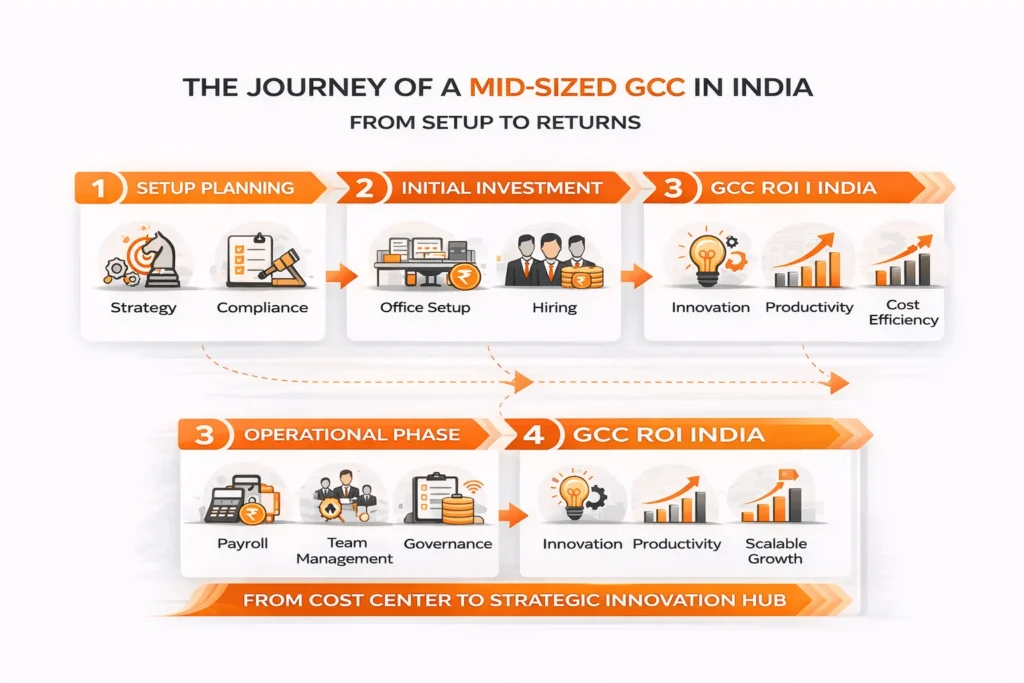
- Although an initial investment is needed, businesses in India get a strong GCC ROI because of lower costs, easier access to talent, and rapid innovation cycles.
- Over time, several capability centers turn into strategic innovation hubs, which help with AI projects, digital transformations, and product development for the entire company.
What is a Global Capability Center (GCC)?
A Global Capability Center (GCC) is an operational unit that multinational companies set up offshore or nearshore to handle important business tasks. Usually, these centers help with things like research, data analysis, customer service, software development, product engineering, and running the finances.
In the past ten years, the GCCs have changed from being traditional places for outsourcing to places that drive innovation and directly affect global business strategy.
A lot of GCCs are located in India, in cities like Bengaluru, Hyderabad, Pune, Chennai, and Gurgaon. All of these centers support global operations while leading projects in cloud computing, artificial intelligence, and advanced analytics.
Key Cost Components of GCC Setup in India
Here is a complete breakdown of the major cost elements involved in creating a GCC in India:
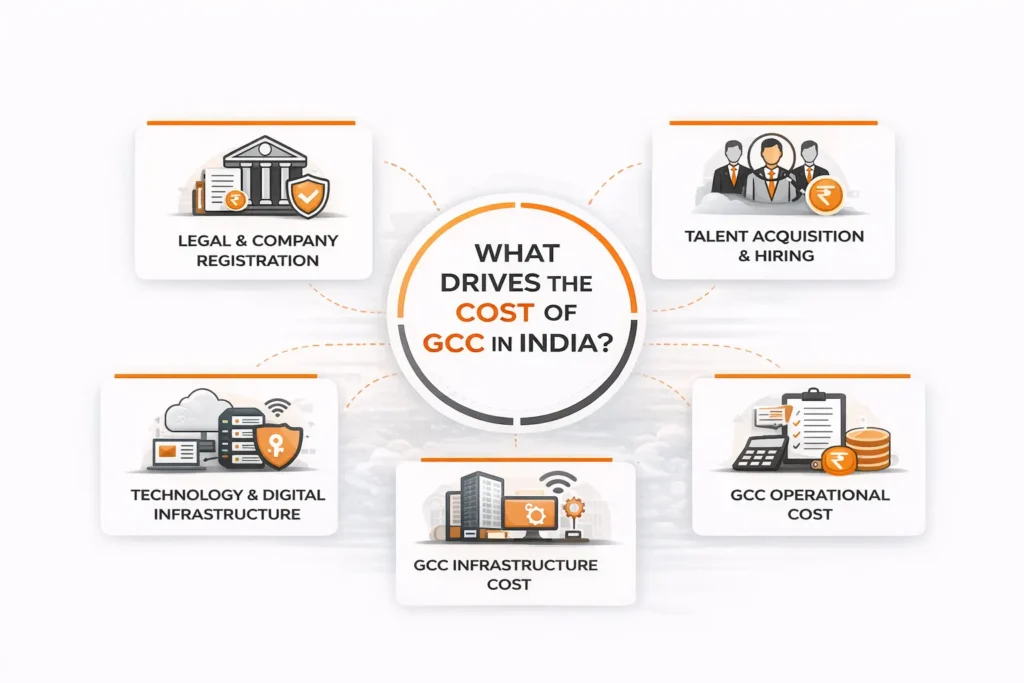
Legal and Company Registration Costs
Building a legal entity in India is the first basic step in setting up GCC. The process involves registering the company with Ministry of Corporate Affairs (MCA). It helps get the identification numbers for directors and complete statutory filings.
The incorporation costs for a Private Limited Company or Limited Liability Partnership (LLP) range from Rs 1 Lakh to Rs 5 Lakh. It depends on the complexity of the setup and advisory fees. Extra approvals are needed if the GCC operates within Special Economic Zones (SEZs) or under specific foreign investment regulations.
These may involve compliance with authorities such as the Reserve Bank of India (RBI) and other regulatory bodies.
Infrastructure and Office Setup Costs
Infrastructure represents the largest upfront investment during the creation of GCC. Cost can vary depending on the city, office size, and infrastructure level.
Office space rental in technology hubs like Hyderabad, Bengaluru and Pune ranges from Rs 50 to Rs 100 per square foot per month for Grade A commercial spaces.
Large GCC facilities can incur significant monthly rental costs based on scale. The initial fit-out and furnishing expenses include workstations, office interiors, lighting and HVAC systems. All of these can range from Rs 50 lakh to Rs 2 crore, depending on customization and office size.
In addition, companies have to invest in IT infrastructure. This includes equipment for networking, servers, cybersecurity systems and communication tools. All these technology-related infrastructure investments range from Rs 1 crore to Rs 5 crore based on operational requirements.
Human Resources and Talent Acquisition Costs
Human resources show us the highest ongoing cost for most GCC operations. Though India offers competitive labor costs in comparison to Western markets, hiring skilled professionals requires investment.
India produces more than 1.5 million engineering graduates every year, providing GCCs with one of the largest technical talent pipelines globally.
For instance, the average annual salary for a software engineer in India is around $15,000. This is significantly lower than the same roles in other countries, such as the US.
HR-related costs often include onboarding, training, and recruitment, which can range from $20,000 to $100,000 based on the number of roles being filled and the complexity of hiring.
Employers must also account for statutory employee benefits, including Provident Fund (PF), Employees’ State Insurance (ESI), and gratuity contributions. All these benefits add 10 to 15% to total employee compensation.
Technology and Software Licensing Costs
Technology investment is essential for allowing secure and proper global operations. The GCCs need enterprise software, cybersecurity tools, cloud infrastructure, and collaboration platforms.
The initial software licensing and platform costs range from Rs 10 lakh to Rs 30 lakh based on the enterprise tools and digital systems used. In addition to initial deployment costs, organizations must budget for annual IT maintenance and support. This ranges from Rs 5 lakh to Rs 15 lakh per year. It is based on the complexity of the technology infrastructure.
Operational and Administrative Expenses
As soon as the GCC is operational, companies need to manage ongoing administrative as well as operational costs. These include utilities like electricity, water and internet connectivity. This may cost around Rs 5 Lakh to Rs 10 Lakh. It is based on office size and operational scale.
Additional expenses include facility management, office supplies and administrative support. All of this ranges from Rs 2 Lakh to Rs 5 Lakh every year. Companies can incur expenses related to communication systems, business travel, and internal coordination with global teams. It depends on the structure and scale of operations.
Once you have an understanding of these components, it lets organizations build a realistic financial model for the GCC setup in India and plan long-term investments effectively.
This breakdown pairs well with our GCC vs outsourcing cost and ROI comparison for a complete financial picture.
Factors That Influence GCC Setup Cost in India
The total cost of GCC in India is affected by several factors, which businesses must take into account when planning their investment in a capability center.
1. Legal Structure and Entity Setup
When building GCC in India, the first decision companies need to make is to select the proper legal structure. The entity structure determines how GCC will operate, its tax obligations, compliance requirements, and the overall setup cost.
Some of the most common legal structures used for GCCs include:
Private Limited Company (PLC)
This is the most widely used structure for GCCs in India. A private limited company lets foreign businesses establish a fully operational subsidiary with limited liability protection. The setup process involves registration with the Ministry of Corporate Affairs (MCA) and compliance with Indian corporate laws.
Limited Liability Partnership (LLP)
LLP provides a flexible operational structure with fewer compliance needs in comparison to a private limited company. It is usually used for smaller operations and joint ventures where partners need operational flexibility while maintaining limited liability.
Branch Office
A branch office lets a foreign company build a presence in India for activities like consulting, researching or support services. But the operational scope is limited in comparison to a fully incorporated entity.
Liaison Office
Foreign companies use a liaison office to build a representative presence in India without engaging in direct commercial activities. Companies use it for market research, relationship building, or exploring potential expansion opportunities. Every structure has a registration process, compliance requirements, and tax obligations. This procedure has an impact on the overall GCC setup cost.
2. Location Strategy and City Selection
Establishing a GCC in a city influences the setup as well as the operational expenses. India offers a wide range of options, from established technology hubs to emerging business centers.
Tier-1 cities like Mumbai, Delhi, NCR, and Bengaluru are all well known for their mature technology ecosystems, strong infrastructure, and access to highly skilled professionals. But these cities come with high real estate prices and salary expectations, as well as operational expenses.
Tier-2 cities, like Hyderabad, Pune, and Chennai, offer more balanced cost structures. All these cities provide access to skilled talent pools as well as business infrastructure. These cities accomplish all this while maintaining lower office rental and operational costs.
When looking for a location, companies need to balance several factors, like operational efficiency, real estate costs, long-term scalability, and talent availability.
Location also affects cost. Check our analysis of the best cities for GCC setup in India for city-wise pricing insights.
3. Infrastructure and Office Setup
Infrastructure is another significant contributor to GCC setup costs. Establishing a fully functional capability center requires investment in physical workspace, IT systems, and digital infrastructure.
Key infrastructure expenses may include:
- office leasing and workspace design
- furniture and facility setup
- networking and connectivity infrastructure
- cybersecurity systems and secure data environments
- enterprise software and hardware
The cost of office space varies significantly depending on the city and the specific business district. In large metropolitan areas, rental costs may be considerably higher than in emerging business hubs.
4. Human Resources and Recruitment Costs
Human capital is the most significant expense for GCC. Hiring and retaining professionals is important when building a high-performing capability center.
Several factors influence human resource costs, including:
Salaries
Compensation varies based on expertise level, job role and location. High specialized roles in areas such as data science, AI, cybersecurity and product engineering often ask for higher salaries.
Recruitment and Hiring Costs
Usually, recruitment expenses include job advertisements, the screening process, agency fees and onboarding programs. The process of hiring for niche technical roles increases the recruitment costs.
Employee Benefits and Compliance
Indian labor laws require companies to provide benefits such as Provident Fund (PF), Employee State Insurance (ESI), and gratuity. All of these statutory benefits form an essential part of employee compensation. It must be included in GCC cost planning.
As talent is central to the success of GCC, companies need to develop a sustainable hiring strategy that balances cost efficiency with access to high-quality professionals.
5. Legal and Regulatory Compliance
Complying with the legal and regulatory framework of India is an important factor. This influences the cost of setting up GCC. Businesses must complete registrations and then follow regulatory guidelines to operate legally.
Here are some of the key compliance needs that include the following:
Ministry of Corporate Affairs (MCA) Registration
Companies need to register with the MCA to build a legal entity in India and then comply with corporate governance regulations.
Reserve Bank of India (RBI) Regulations
Foreign Investments in Indian entities are regulated by Foreign Direct Investment (FDI) policies and the Foreign Exchange Management Act (FEMA). Certain sectors do need RBI approval. Tax registration companies need to get proper tax registrations, such as PAN, GST and comply with TDS regulations wherever applicable.
Ensuring complete compliance with regulations involves legal advisory fees, ongoing compliance management and registration costs. All of these contribute to the overall cost of building and operating a GCC.
Key Challenges in GCC Setup in India
India offers advantages for building Global Capability Centers but companies have to prepare for operational challenges as well as hidden costs, which may increase during setup and early operations.
Regulatory and Compliance Complexity
- GCC setup needs registrations with several authorities like the Ministry of Corporate Affairs (MCA), the Reserve Bank of India (RBI), and the GST authorities.
- Every registration has documents, regulatory filings and ongoing compliance obligations.
- Companies have to comply with evolving labor laws, employment regulations, and data protection rules. This includes the Digital Personal Data Protection Act.
Talent Acquisition and Retention
- The technology sector in India experiences high employee attrition. This increases the recruitment and training costs as well.
- Hiring for specialized roles like AI, advanced analytics, or semiconductor engineering may take longer because of limited talent availability.
- Companies have to invest in competitive salaries, benefits, and retention programs to maintain workforce stability.
Operational and Cultural Integration
- Integrating GCC with the global headquarters creates challenges related to time zone differences, communication styles, and operational alignment.
- To ensure collaboration between global teams, we need standard workflows, defined communication channels, and proper governance structures.
- Change management and employee training are needed when introducing new technologies or even operational processes.
Transfer Pricing and Taxation Considerations
- Intercompany transactions between the parent company and the GCC must comply with transfer pricing regulations, requiring detailed documentation and arm’s-length pricing structures.
- Cross-border services and transactions may also have GST and other indirect tax implications.
- Planning carefully is necessary to avoid financial inefficiencies, as profit repatriation to the parent company may involve withholding taxes and foreign exchange compliance.
Once you have mapped your budget, explore strategies to optimize GCC operational costs and improve margin over time.
By anticipating these regulatory, operational, and financial considerations, companies can plan their GCC setup more effectively and minimize unexpected costs during expansion.
Conclusion
Setting up GCC in India offers long-term benefits, despite the need for proper planning and cost estimation. Brands can make better choices regarding global expansion plans if they understand the GCC setup costs in India and other associated expenses.
India is a great place for GCC setup, as they have skilled workers, strong innovation and a low-cost way of handling business. Once businesses invest properly in their capability centers, they get operational value and become competitive on a global scale.
If you want expert guidance, our GCC financial planning services help businesses create realistic budgets and achieve ROI from day one.
FAQs
What is the average GCC setup cost in India?
The GCC setup cost in India depends on where it is located, the size of the team, the kind of infrastructure needed, and the operational scope. From several hundred thousand dollars to a few million dollars can be spent on the startup costs of medium-sized capability centers.
What are the main components of the cost of GCC in India?
The main parts of the cost are: registering the business and making sure it follows the law, building an office, hiring people and paying them, technology systems, and ongoing operational costs like payroll, administration, and facility management.
Which cities in India are best for setting up a GCC?
Chennai, Gurgaon, Pune, Hyderabad and Bengaluru are the best-known GCC hubs in India. All these cities have talented people, advanced tech ecosystems and well-developed commercial infrastructure.
How long does it take to set up a GCC in India?
Setting up a GCC can take a long time or a short time, depending on how long it takes to get regulatory approvals, set up infrastructure, and hire people. Companies can start up and run within a few months if they plan the setup process properly.
