
Future Ready Manufacturing IT Solutions
- INTECH designs advanced manufacturing software ecosystems, industrial automation platforms, and intelligent data systems that modernize factory operations end-to-end. Our solutions accelerate your production cycles, prevent downtime, strengthen quality control, and deliver unified, real-time visibility.
Reimagining Manufacturing for a Connected, Efficient, and Scalable Future
Global manufacturers operate in an environment shaped by fluctuating materials costs, workforce shortages, equipment volatility, disconnected legacy systems, and unpredictable supply chains. INTECH delivers modern manufacturing IT solutions that bring together every operational layer, creating a unified digital environment where decisions are faster, smarter, and data-backed.
We build cloud-ready MES platforms, modernize ERP architectures, implement industrial automation, and infuse real-time analytics into daily factory workflows. Our systems seamlessly connect production floors, distribution centers, suppliers, inventory networks, enterprise applications, machinery, and global operations.
The outcome is stronger production continuity, streamlined resource utilization, lower operating waste, and consistently reliable delivery performance. Manufacturers gain end-to-end visibility, operational predictability, higher equipment availability, and complete traceability from procurement through shipment, enabling sustainable, profitable growth.
Adaptive, Data Smart, And Growth Ready Manufacturing Technology Services
Modern manufacturing demands agility, precision, and continuous optimization. INTECH supports manufacturers, OEMs, industrial distributors, and factory networks with digital solutions that modernize legacy operations, create real-time visibility, and unlock long-term operational efficiency.
Manufacturing ERP Solutions
We design intelligent ERP ecosystems that bring production planning, procurement, inventory, HR, compliance, quality, finance, and sales into a single operational backbone for accurate forecasting, synchronized workflows, and faster decisions.
- Integrated production planning and scheduling
- Centralized procurement and supplier management
- Real-time inventory and material visibility
- Unified finance, costing, and compliance controls
- Workforce and HR process integration
- Data-driven forecasting and decision support
Supply Chain Management
Our SCM platforms improve supplier performance, automate purchasing, optimize inventory flow, strengthen demand planning, and streamline logistics, enabling organizations to deliver on time, every time.
- Supplier performance monitoring and scorecards
- Automated purchase planning and order execution
- Demand forecasting and capacity alignment
- Inventory optimization across locations
- Logistics and transportation coordination
- Exception management and real-time alerts
Warehouse Management System (WMS)
Get purpose-built WMS solutions that support high-volume operations with precise receiving, optimized storage strategies, automated replenishment, accurate picking, and smoother outbound execution.
- Advanced inbound receiving and putaway logic
- Optimized slotting and space utilization
- Automated replenishment workflows
- Barcode and RFID-enabled picking accuracy
- Order consolidation and outbound execution
- Real-time warehouse performance visibility
Industrial IoT Solutions
We offer connected IIoT architectures that integrate machines, sensors, PLCs, tools, and factory equipment to deliver live operational data, predictive insights, performance monitoring, and automated response capabilities.
- Real-time machine and equipment monitoring
- Sensor and PLC integration across production lines
- Predictive maintenance and downtime reduction
- Energy consumption tracking and optimization
- Asset performance and utilization analytics
- Automated alerts and operational triggers
AI and ML for Manufacturing
Our AI-driven models support defect prediction, production scheduling, energy optimization, maintenance planning, yield analytics, and continuous quality improvement across production lines.
- Defect detection and quality prediction
- Intelligent production scheduling optimization
- Predictive maintenance and failure forecasting
- Yield and throughput optimization
- Energy efficiency and resource optimization
- Continuous learning and process improvement
Food and Beverages Manufacturing Software
We develop specialized F and B platforms that ensure regulatory compliance, batch and recipe management, ingredient traceability, safety audits, shelf life management, and real-time production control.
- Batch and recipe management control
- Ingredient and lot level traceability
- Regulatory and food safety compliance
- Shelf life and expiry management
- Quality audits and inspection workflows
- Real-time production monitoring
Product Lifecycle Management PLM Software
Our PLM solutions consolidate engineering data, product documentation, revisions, approvals, compliance records, and collaboration workflows to reduce time-to-market and minimize production risks.
- Centralized product and engineering data
- Version control and change management
- Design and approval workflow automation
- Regulatory and compliance documentation
- Cross-functional collaboration enablement
- Reduced time to market and production risk
INTECH's Manufacturing Software Platforms

Automated transactional workflows
RPA automates data entry, order processing, inventory updates, reconciliations, and report compilation across fragmented systems. Bots follow predefined rules and validations to process high-volume transactions consistently, reducing manual effort, rework, and cycle times.
This frees planners, buyers, and finance teams from low-value, repetitive tasks, allowing them to focus on exception handling, supplier collaboration, and strategic cost optimization instead.

Cross-system process orchestration
Software robots seamlessly move data between disconnected systems—such as ERP, MES, QMS, and vendor portals—without requiring custom point-to-point integrations. They capture, transform, and post information exactly as a human would, but with greater speed and reliability.
This orchestration ensures consistent information flow across the manufacturing value chain, reducing data latency and eliminating manual file transfers or dual entry that often cause discrepancies.

Improved accuracy and compliance
Standardized automation reduces human errors in key processes like purchase order creation, goods receipt posting, quality logging, and compliance reporting. Every bot action is logged, providing a robust digital audit trail for internal controls and regulatory audits.
By enforcing business rules and documentation standards, RPA helps manufacturers maintain consistent compliance across plants and regions, even as volumes and complexity increase.

Faster cycle times and productivity gains
With bots handling routine workloads around the clock, transactional processes that once took hours can be completed in minutes. Studies of RPA in manufacturing show reductions in indirect overhead and faster information flow without major system replacement.
These productivity gains improve responsiveness to demand changes, support faster month-end closes, and enable leaner operating models where human expertise is focused on optimization rather than administration.
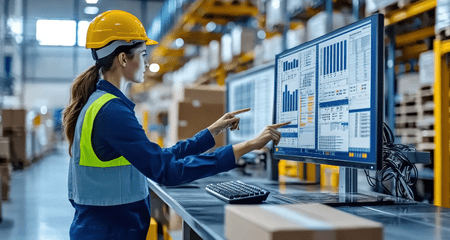
Demand-driven inventory planning
AI models analyze historical demand, seasonality, production plans, customer requirements, and supply variability to dynamically adjust inventory strategies. Forecasts are continuously updated with real-time data from orders, production, and IoT signals to reflect current conditions.
This demand-sensitive planning reduces the reliance on static safety stock rules and manual spreadsheet planning, improving forecast accuracy and aligning inventory policies with actual consumption patterns.
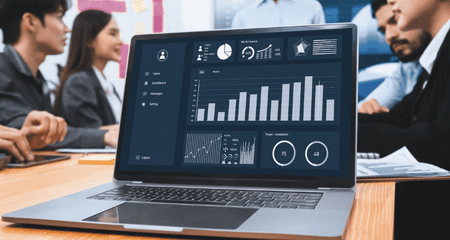
Multi-echelon inventory optimization
The platform optimizes inventory across raw materials, intermediates, work-in-progress, and finished goods, while accounting for supplier lead times, production constraints, and distribution networks. Multi-echelon inventory optimization (MEIO) models position stock at the most efficient nodes rather than independently optimizing each location.
Manufacturers using MEIO can reduce overall inventory while maintaining or improving service levels, thanks to better synchronization between upstream and downstream echelons.

Reduced stockouts and excess inventory
Continuous optimization minimizes shortages and overstocking by proactively adjusting reorder points, lot sizes, and buffer levels as demand and supply conditions change. The system identifies where inventory is at risk of becoming obsolete and where coverage is insufficient. This improves material availability for production, reduces emergency expediting, and cuts carrying costs and write-offs—outcomes repeatedly highlighted in MEIO and AI-inventory case studies.

Improved working capital efficiency
Better inventory accuracy and control free up working capital trapped in slow-moving or misplaced stock, improving cash flow without compromising service levels. Management teams gain clear visibility into where capital is deployed and which policies drive the highest ROI.
By aligning inventory with true risk and demand patterns, manufacturers can support growth with leaner, more agile inventories across plants and distribution networks.
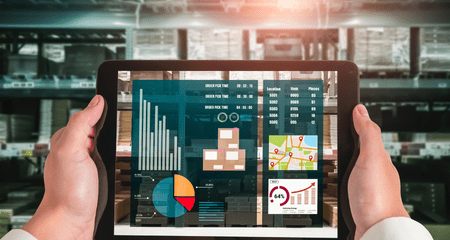
Centralized vendor data management
All supplier information, including master data, contracts, certifications, audit reports, and compliance documents, is maintained in a single, structured platform. This replaces scattered files and local spreadsheets with a controlled, searchable system of record.
Centralized data ensures that sourcing, quality, and finance teams work with consistent, up-to-date information, reducing onboarding delays and administrative overhead.

Supplier performance tracking
Scorecards and KPIs measure delivery reliability, quality metrics, lead time adherence, and responsiveness across categories and regions. Performance trends are visualized to highlight best-performing partners and suppliers requiring development or remediation.
Objective performance tracking supports more informed negotiations, dual-sourcing decisions, and supplier development programs aligned with manufacturing priorities.

Risk and compliance monitoring
Automated alerts flag potential supplier risks, such as expiring certifications, repeated quality issues, or missed deliveries. The platform can also track ESG or regulatory requirements for specific industries and geographies.
Early visibility into risk allows manufacturers to take proactive actions—such as rebalancing volumes or initiating corrective action plans—before issues affect production or customers.

Improved collaboration and transparency
Shared visibility, structured communication channels, and digital workflows (for RFQs, changes, and approvals) strengthen supplier relationships. Both parties can see status, actions, and expectations clearly, reducing friction and misalignment.
This collaborative foundation supports more reliable supply continuity, faster issue resolution, and better alignment of suppliers with long-term manufacturing strategies.

Real-time asset health monitoring
Continuous data collection from machines, sensors, and control systems provides a live view of asset health indicators such as vibration, temperature, pressure, and power consumption. These signals are aggregated and analyzed to detect deviations from normal operating envelopes.
Real-time monitoring enables maintenance and operations teams to see emerging issues early, rather than discovering them after a breakdown or quality problem has occurred.

Failure prediction and risk alerts
Advanced analytics and machine learning models identify patterns and signatures that indicate potential failures such as bearing wear, misalignment, or lubrication issues often long before they manifest as downtime. The system generates risk alerts and recommended actions for critical assets.
Quantitative studies of predictive maintenance show reductions in unexpected downtime and maintenance costs, along with improved equipment availability and stability.

Optimized maintenance planning
Predictive insights help schedule maintenance based on actual equipment condition and risk, rather than fixed time intervals. Work orders can be aligned with planned production stops or low-demand periods, minimizing disruption to throughput.
This reduces unnecessary preventive tasks, avoids last-minute emergency interventions, and improves the overall efficiency of maintenance resources.

Increased asset reliability and OEE
By minimizing unplanned downtime, catching issues early, and optimizing maintenance timing, the solution improves overall equipment effectiveness (OEE) across availability, performance, and quality dimensions.
Plants that adopt predictive maintenance often report double-digit reductions in downtime and defect rates, translating into higher output, better delivery reliability, and extended asset life.

In-line and post-process quality automation
Automated inspections, sensor-based checks, and integrated test stations capture quality data during and after production. Defects and deviations are detected as close to the point of origin as possible, reducing rework, scrap, and downstream failures.
Digital workflows route non-conformances through standardized review, disposition, and corrective action processes, ensuring consistent handling across lines and plants.
AI-driven anomaly detection
Machine learning models analyze process and quality data to identify subtle patterns and anomalies that may not be obvious through manual inspection or basic SPC. These models can flag early drift in process parameters that could lead to defects if left unaddressed.
By moving beyond static control limits, AI-based anomaly detection enhances the ability to maintain tight tolerances and stable process capability over time.3

Digital quality records and traceability
End-to-end digital documentation creates comprehensive traceability across batches, processes, equipment, and suppliers. Test results, inspections, deviations, and approvals are stored in a structured, searchable format.
This simplifies audits, accelerates root-cause analysis, and supports efficient recall or containment actions when needed, especially in regulated industries.

Continuous quality improvement
Real-time dashboards and analytics highlight recurring issues, defect patterns, and yield losses across products, lines, or shifts. Quality and operations teams can prioritize improvement initiatives based on data rather than anecdote.
Over time, this continuous improvement loop raises first-pass yield, reduces the cost of poor quality, and strengthens customer satisfaction and brand reputation.
Ready to scale smarter and faster? Let's build solutions that drive real impact.
From concept to execution, we help you innovate smarter. Let’s make your vision a reality.
Why INTECH Leads Manufacturing Digital Transformation
INTECH helps manufacturers, industrial enterprises, and OEMs transition from fragmented, manual, and reactive operations to intelligent, automated, and scalable production environments driven by real-time data.
Proven Mastery in Industrial IT and Automation
Partnerships Built Around Measurable Business Outcomes
Future Ready Technology Infrastructure for Smart Manufacturing
Operational Clarity and Real-Time Intelligence Across the Value Chain
Complete Digital Modernization Journey Support
Technology That Powers Intelligent, Connected, and High-Performing Manufacturing
Modern manufacturing thrives on real-time data, automated decision-making, and fully integrated digital ecosystems. INTECH strategically applies AI, IIoT, cloud, analytics, and automation to enable clients to boost productivity, minimize operational waste, and unlock continuous improvement.
Through these technologies, INTECH delivers advanced manufacturing IT services and software solutions that strengthen operational reliability, accelerate innovation, and position manufacturers worldwide for long-term digital success.
- Artificial Intelligence (AI)
- Machine Learning (ML)
- Industrial IoT (IIoT)
- Cloud-Based Manufacturing Infrastructure
- Computer Vision and OCR
- Digital Twin for Factory Optimization
- Blockchain for Manufacturing Traceability
Ready to Turn Challenges into Opportunities?
Let’s connect and create solutions that work for you.
Performance Outcomes Delivered
- 42% increase in production line efficiency
- 50% reduction in unplanned machine downtime
- 37% lower operational and maintenance costs
- 48% faster supplier and procurement workflows
- 30% improvement in forecasting and inventory accuracy
- 65% speedier quality inspection cycles
Why Do Global Manufacturing Giants Trust INTECH?
Years of Cross-Industry Experience
Driving innovation for enterprises in retail, logistics, ports, manufacturing, and beyond.
Technology Experts
A diverse team of specialists delivering scalable and advanced IT solutions.
Delivery Locations Across the Globe
Ensuring seamless project execution and 24/7 support worldwide.



Case Studies
Discover cutting-edge ideas and insights from the world of technology and business.
Blogs
Discover cutting-edge ideas and insights from the world of technology and business.

FAQs
Do you offer custom manufacturing software development services?
Can your systems integrate with existing factory tools and ERPs?
What operational improvements can manufacturers expect?
Do your solutions support multi-plant or global operations?
Yes, our cloud and hybrid architecture enables centralized monitoring, standardized governance, and cross-facility collaboration.