

Imagine managing a global supply chain in which you could track the movements of every container, truck, machine, and inventory unit. How would that be? This would allow you to monitor every container, truck, machine, and inventory unit in real time, not just hours later. That level of visibility is becoming a competition in the supply chain.
As per a study by McKinsey, companies with real-time supply chain visibility are about 2.5x times more likely to outperform other competitors during disruption. Gartner, on the other hand, predicts that IoT will grow at a rate of 10.3% CAGR through 2028.

True end-to-end visibility remains a challenge. That is where real-time supply chain analytics, powered by IoT sensors, cloud-based data platforms, are helping reshape the workings of logistics, manufacturing, and ports.
In this blog, we will take a look at how real-time analytics creates unified visibility across ports, logistics, as well as manufacturing.
Key Insights
- Real-time visibility is becoming essential as global supply chains grow more complex and volatile.
- Companies with real-time analytics outperform others during disruptions by up to 2.5x.
- IoT sensors, edge computing, cloud platforms, and AI form the backbone of real-time supply chain intelligence.
- Most organizations still struggle with fragmented systems, siloed data, and inconsistent partner technology.
- True end-to-end visibility requires unified data layers and seamless integration across ERP, WMS, TMS, MES, and port systems.
- Real-time dashboards and control towers provide a single operational view across ports, logistics, and manufacturing.
- Predictive analytics helps forecast ETAs, prevent downtime, reduce delays, and optimize routes.
What is Real-Time Supply Chain Analytics?
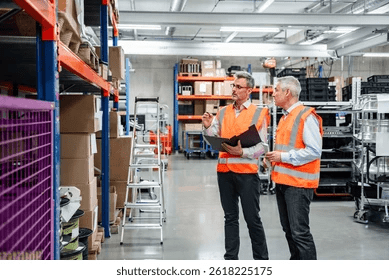
Real-time supply chain analytics refers to the continuous collection, processing, and interpretation of data from every stage of the supply chain, i.e, ports, logistics networks, manufacturing units, and warehouses.
So basically, real-time analytics work on three major layers:
Live Data Capture
RFID tags, GPS trackers, machine sensors, telematics, and IoT devices capture temperature, speed, movement, machine status, inventory levels, and congestion indicators across all supply chain.
Instant Data Processing
Edge computing, AI models, and cloud platforms process a lot of data points every second. This helps detect anomalies, predict delays, and track operational KPIs as they unfold.
Actionable Insights
There are control towers and real-time dashboards that help convert raw data into insights, alerts, predictive ETAs, capacity forecasts, and recommended actions for various operational teams.
Key Challenges in Achieving End-to-End Visibility
Real-time visibility across ports, logistics networks, and manufacturing operations may sound easy, but in reality, it is not.
Here are some challenges to look into:
1. Fragmented Systems and Siloed Data
Supply chains work with various systems like ERP, TMS, WMS, and MES, but most of these do not communicate with each other, resulting in
- Isolated data streams
- Delays in information sharing
- Manual reconciliation
- Inconsistent insights
This makes it difficult to build a single, unified view of operations.
2. Lack of Real-Time Data Accuracy
Though data exists, it often arrives late. Ports may update container movements every hour, logistics providers may send route updates at checkpoints, and factory machines may report data in batches.
All of this results in
- Latency in decision-making
- Mismatch between physical movement and digital updates
- Inability to respond to disruptions proactively
Real-time visibility requires instant, accurate data. This is something that most legacy setups cannot provide.
3. Limited Tracking Across Multimodal Transport
Cargo goes through a mix of trucks, rail, air, ships, and inland water transport. Every mode has tracking standards and digital maturity.
As a result, organizations struggle with:
- Dark spots during intermodal transfers
- Missing handover data
- Unclear ETAs and dwell times
- No unified timeline for container or cargo movement
This is a major barrier to seamless logistics visibility.
4. Inconsistent Technology Adoption Across Partners
Supply chains have different stakeholders like 3PLs, trucking partners, manufacturers, distributors, suppliers, and customs agencies. However, none of these stakeholders use IoT sensors, data platforms, or even GPS tracking.
As a result?
- Partial visibility instead of full visibility
- Manual updates from certain partners
- Data gaps that weaken predictive analytics
- A single weak link can break end-to-end visibility
5. Legacy Infrastructure and Integration Issues
Many manufacturing facilities and ports operate on traditional systems made for batch reporting and not real-time analytics.
Integration becomes way more difficult when:
- Systems lack APIs
- Data formats are inconsistent
- Hardware is outdated
- On-ground processes are not automated
This slows down digital adoption and delays real-time insights.
6. Poor Data Governance and Data Quality
Even with a lot of data around, poor governance can result in:
- Duplicate or incorrect records
- Unstructured or incomplete data
- Inconsistent naming conventions
- Conflicting information from different sources
Without clean, standardized data, visibility becomes unreliable.
7. Cybersecurity and Compliance Constraints
The process of real-time data sharing across logistics operators and manufacturers increases risk exposure.
Organizations hesitate because of:
- Data privacy concerns
- Cross-border compliance issues
- Fear of cyber intrusions
- Lack of secure data-sharing frameworks
This limits full integration and slows down visibility initiatives.
How Real-Time Analytics Works?
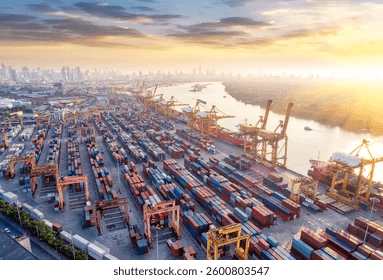
Real-time analytics works through a tightly connected digital ecosystem where IoT devices, edge computing, cloud platforms, AI models, and centralized dashboards work together.
IoT Devices & Sensors
IoT devices are like the eyes and ears of the modern supply chain. There are sensors attached to trucks, machines, warehouse shelves, and pallets that capture live data like location, vibration, humidity, temperature, and inventory movement. Various technologies, such as GPS trackers, telematics units, BLE beacons, and machine-mounted industrial sensors, make sure that every physical activity has a digital trace.
Edge Computing
Edge computing plays a crucial role in the processing of data. This happens more as IoT devices generate a huge volume of information. There is no need to send everything to the cloud and wait for a response. Vehicles, factory floors, ports, and warehouses place edge devices that facilitate the easy cleaning, filtering, and analysis of data.
Cloud Data Platforms & Data Lakes
Cloud data lakes are central storage places where information from IoT devices, ERP systems, WMS, TMS, MES, port community systems, and partner networks is collected together. Such an environment eliminates data silos and provides one source of truth for the whole supply chain. Cloud platforms offer the scalability required to ingest and process data points per second.
AI, ML & Predictive Analytics
As soon as data is centralized, machine learning and AI bring intelligence and foresight to the supply chain. All these models help analyze historical patterns and inputs to help predict future outcomes with better accuracy.
Real-Time Dashboards & Control Towers
Any kind of insights that are produced by cloud platforms, AI, edge computing, or IoT are visualized through real-time dashboards and supply chain control towers. All these interfaces provide the operations team a single unified view of what is happening across logistics networks, warehouses, manufacturing lines, and ports.
How to Implement Real-Time Supply Chain Analytics (Step-by-Step)?
Implementing real-time analytics across logistics, manufacturing, and ports needs a proper approach that helps connect data, systems, and operations into one system.
1. Map Data Sources Across Ports, Logistics, and Manufacturing
Examining each point in the supply chain that generates meaningful data is one of the first steps. This includes container movements in fleet telematics from logistics partners, warehouse inventory flows, and machine performance data on manufacturing floors.
2. Deploy IoT and Sensor-Based Data Collection
Immediately after mapping data sources, organizations must utilize sensors and IoT devices to digitize physical operations. GPS trackers, temperature and humidity sensors, and barcode scanners create a digital stream of live operational data. These sensors make it possible to see cargo, fleets, equipment, and inventory in real time without having to do manual checks.
3. Integrate ERP, WMS, TMS, MES Into a Unified Data Layer
Supply chain visibility is impossible when operational systems function in silos. Integrating ERP, WMS, TMS, MES, port community systems, and logistics partner platforms into a unified data layer ensures seamless information flow. This integration prevents inconsistent updates, isolates pockets of intelligence, and duplicates records.
4. Set Up Mapping Rules & Real-Time Data Ingestion Pipelines
Once integration is done, the next step is to build data ingestion pipelines that bring information into a centralized platform in real time. Mapping rules show how each data point is structured, tagged, validated, and synchronized. These pipelines make sure that raw data from sensors, machines, and systems is cleaned, standardized, and ready for analysis within a matter of a few seconds.
5. Build Dashboards and Supply Chain Control Towers
After the data infrastructure is ready, organizations must design dashboards and control towers that present insights in a clear, actionable format. Such interfaces let teams track containers, shipments, fleet movements, machine performance, inventory levels, and other operational KPIs in real time.
6. Add Predictive Analytics & AI for Forecasting
As real-time data flows seamlessly, organizations can introduce AI and machine learning models to improve visibility from descriptive to predictive. Once the system identifies patterns and predicts future events, it can enable demand forecasting, estimated arrival times, inventory restocking alerts, route planning, and maintenance predictions. This step shifts supply chain data-driven operations from reactive problem-solving to proactive planning and automated decision support.
7. Establish Governance, Compliance & Data Security
Finally, for real-time analytics to scale safely, strong governance and security frameworks must be established. This includes data access controls, role-based permissions, cybersecurity measures, audit trails, data quality policies, compliance with international regulations, and secure partner integrations.
Conclusion
Real-time analytics is slowly becoming the backbone of modern supply chains. Logistics networks, manufacturing operations, and ports require instant visibility and predictive intelligence to maintain resilience. Organizations can eliminate blind spots by connecting to IoT data, cloud platforms, AI insights, and control towers. This results in faster response to disruption, better accuracy, and efficiency. With global supply chains growing, the power to see, analyze, and act in real time will help define leaders of the next era of logistics and manufacturing.
