

Every business starts with a clear vision, but in the middle, the vision often becomes blurred due to the common confusion that often arises. Picking the right tech stack for business. Tech stack is everywhere, making it the backbone of business. However, the market of emerging tech stack is moving towards $592B by 2032.

A tech stack that should be chosen as a unique and strategic business approach is a confusing choice because developers prefer to pick between React, Angular, Node.js, etc. Among the emerging technology trends 2026, while one developer insists on Angular, another recommends Vue. However, the final choices depend on multiple factors, such as cost, speed, and opportunities.
Ultimately, things become complex and more challenging due to the rise of AI-assisted coding, low-code, and no-code cultures. In this blog, we will guide you in selecting the right future tech stack, which could be the most promising one, and help businesses ensure long-term success.
Why Tech Stack Is the Backbone of Businesses?
A tech stack is a collection of software, tools, platforms, and technologies that a business uses to facilitate efficient operations. The right tech stack ensures everything from your customer relationship management (CRM) system to running the email marketing platform, accounting software, multiple project management tools, and different communication apps.
You can also break down the tech stacks into multiple distinct layers that serve different business functions. Let’s examine the core components that are considered essential to businesses.
- Front-end Technologies: Front-end technologies are those that customers interact with directly. There are websites, mobile apps, customer portals, and digital signage displays that create the ultimate experience through which people can associate with your brand or business.
- Backend Infrastructure: Backend infrastructure is the system that runs behind the scenes and powers your business operations. While databases store customer information, servers host the applications, and APIs connect multiple platforms, making data sharing a seamless process.
- Business Applications: Business applications help to keep the team very productive and organized. The right CRM platforms track genuine customer relationships, project management software coordinates seamless workflows, and data analytics dashboards turn raw data into actionable insights.
The term “stack” belongs to the latest technologies that generally layer on top of each other. Frontend applications also rely on backend infrastructure. Focusing on enterprise innovation 2026, the smart business applications pull the necessary data from your databases. Furthermore, the communication tools integrate with your project management platforms.

When you finalize the correct tech stack as an interconnected system rather than a collection of apps, you can make smarter decisions. Therefore, you can ensure that everything works together.
Which Tech Stacks Are Worth Considering in 2026?
Choosing the right tech stack in 2026 means selecting tools that align with your app type, team’s skills, and business vision. Let’s briefly understand it by mentioning some popular technologies.
Frontend Tech Stacks That Shape Modern User Interactions
From using the latest interface to interaction, the frontend defines how users perceive and interact with the latest product. A strong frontend provides superior backend support, ensuring high user engagement and satisfaction. If you want to explore best practices related to the future tech stack and focus on real-world implementations, examining the smart frontend development can provide some valuable insights.
1. React
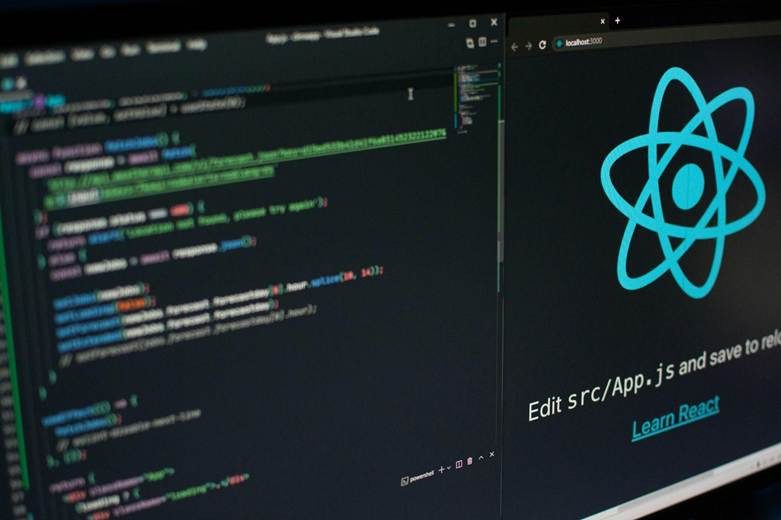
React, the latest technology stack, continues to dominate the system due to its flexible and component-driven architecture. According to the 2024-2025 survey report, nearly 41.6% of professional developers use React. It is ideal for building some dynamic and interactive user interfaces that scale across web and mobile platforms. The virtual DOM also improves performance and ensures smooth rendering for multiple large applications.
- Real-world insight: A financial business used React tech stack to develop a live dashboard and updated it using real-time with market data. As a result, users appreciated the responsiveness.
- AI & Automation Adaptability: When it comes to ensuring better compatibility with AI/ML trends, React is highly adaptable. It helps with an easy integration and allow multiple chatbots, personalized engines, or predictive analytics to ensure the best results.
2. Vue
Vue provides a lightweight and easy-to-learn frontend solution, making it an excellent choice for startups and rapid MVP development. According to the 2025, almost 93.4% of developers use it. It provides reactive data binding, clean syntax, and simple integration with existing projects. Vue’s flexibility allows teams to build prototypes quickly while maintaining good performance and code readability.
- Real-world insight: Vue is a lightweight framework that enables multiple professionals to make some latest and rapid updates. However, the results depend on user feedback, keeping costs low.
- AI & Automation Adaptability: Moderate Vue technology, when integrated with smart AI and automation features, requires additional microservices.
3. Angular
While focusing on some latest enterprise innovation in 2026, Angular is considered as a full-featured and enterprise-ready framework that offers structured development and some built-in tools. According to the 2024 Stack Overflow survey, nearly 17.1% of developers report using Angular. This, in turn, reduces dependency on multiple external libraries. It also works well for large-scale applications with multiple teams.
- Real-world insight: An Angular tech stack allows the developers to manage multi-module patient management. A consistent structure also enables several teams to collaborate easily and efficiently without taking part in conflicts.
- AI & Automation Adaptability: While utilizing AI/ML trends, it supports latest backend AI integrations and automation workflows through smart scaling and predictive analytics.
4. N.ode.js
Node.js is an excellent event-driven and non-blocking framework. Reports show that nearly 40.8% of developers use the Node.js stack. It enables businesses to develop real-time and scalable business applications. Furthermore, the flexibility and speed of this tech stack make it an ideal choice to develop modern web and mobile backends.
Real-world insight: An e-commerce platform, when built on Node.js, provides latest inventory updates as well a real-time chat without downtime. This non-blocking architecture further ensures that checkout remained very smooth, allowing users to receive a seamless experience.
AI & Automation Adaptability: Node.js easily integrates the latest ML models, AI APIs, and allow integrating real-time predictive features.
5. Laravel
Laravel provides a seamless and elegant PHP development experience, featuring some expressive syntax and an API-ready architecture. As per reports, approximately 1.5 million websites worldwide utilize the tech stack Laravel. It simplifies easy routing and authentication that assist to build smart applications quickly and efficiently. Its MVC pattern and built-in tools also make it ideal for startups and businesses that prioritize rapid product launches.
Real-world insight: A real estate company used the tech stack Laravel to launch a website with some dynamic pricing and integrated payments. The development speed also allowed them to test and iterate.
AI & Automation Adaptability: AI and automation is also possible at a moderate level as it requires extra infrastructure.
6. NoSQL
NoSQL databases are flexible and highly scalable, making them ideal for working with unstructured or rapidly evolving data. They scale businesses with ease and are considered very well-suited for real-time analytics, IoT systems, and AI-driven workloads. Currently, there are approx 16% of developers use NoSQL databases that store diversified data types without predefined schemas.
Real-world insight: A gaming platform uses NoSQL that helps to manage real-time player stats and multiple events. The database also scales businesses easily, as millions of players interact through these platforms.
AI & Automation Adaptability: By focusing the AI/ML trend, the tech stack efficiently handles high-volume AI queries and facilitates real-time analytics.
What Key Aspects Should Be Considered While Picking a Latest Tech Stack?
Choosing the future tech stack in 2026 is not about chasing the latest trends, but rather aligning with the ultimate business objectives that ensure a long-term business vision. However, following some vital steps can help you to make a better decision.
Step 1: Define Your Business Goals
Define your app’s purpose, target the users, and list the essential features. Your tech stack perfectly aligns with the problem you are solving and how users engage with the product.
Whether it’s about making real-time social interactions or focusing on intensive data processing, it must support your business goals and long-term vision.
Step 2: Understand the Type of Application You Want to Build
Identify the right kind of emerging technology trends 2026 and the app you want to build. Pick the right tech tack as it is important. While MVPs need excellent speed and adaptability, enterprise apps demand both security and scalability.
Furthermore, make the choice between native and cross-platform mobile development, besides considering the integration needs. This clarity ensures that you can strike a perfect balance between speed, cost, and long-term technical flexibility.
Step 3: Evaluate Frontend, Backend & Latest Database Options
With your app vision defined perfectly, select the excellent UI framework and database. Choose some of the latest frontend tools that are based on the UI/UX needs. Pick some of the latest backend technologies and ensure a reliable performance, security, and greater scalability.
While the large-scale apps get benefit from microservices or utilize hybrid databases, they can also successfully adapt diversified data requirements.
Step 4: Evaluate Greater Scalability and Security
Assess how your chosen stack will scale with user growth and feature expansion. Use a cloud transformation roadmap for easy scaling and for modular updates. Also, prioritize the latest security aspects through proven frameworks and regular updates.
Ensure your tech stack is completely future-ready and supporting easy and seamless AI integrations. Applying these allow your business to get evolved over time.
Step 5: Check All the Available Resources
Ensure your tech stack matches the latest skills of your existing team or the team you are going to hire. Evaluate some required tools, easy integrations, and infrastructure to avoid the chances of bottlenecks. Consider the total cost of ownership, licensing, development, maintenance, and future scaling.
Choose some technologies that are sustainable, accessible, and cost-efficient and can be handled later easily.
Step 6: Consider Maintainability and Ecosystem Support
When it comes to ensuring enterprise innovation 2026, select mature and well-documented technologies that simplify overall maintenance and long-term updates.
Thus, you can ensure greater compatibility with DevOps tools, CI or CD pipelines, and multiple testing frameworks that streamline the easy deployment. Choose strong ecosystems with active communities and plugins also reduce the issues debugging time and increase overall innovation potential.
Conclusion
As technology continues to evolve over time, emerging technology trends 2026 reward multiple enterprises that plan and build a strong foundation. Furthermore, by adopting latest AI-friendly frameworks, cloud transformation, multiple scalable and secure components, businesses can stay very competitive and adapt according to the changes.
However, the ultimate key is not chasing the latest trends, but rather finalizing an excellent tech stack. So, invest in the best tech stack, unlock faster growth, smarter automation, besides ensuring a sustained digital leadership.
