

Do you know that both modern container and multi-cargo terminals face a hard trade-off? However, both of these must drive higher throughput and proper automation while delivering real-time visibility. A terminal operating system (TOS) is considered the software backbone that schedules perfect moves, manages a proper yard space with customs and automation hardware.
According to UNCTAD’s Review of Maritime Transport 2023-2024, global container port throughput surpassed 860 million TEUs, highlighting the scale and operational complexity terminals must manage. This article also focuses on container and multi-cargo terminals while comparing multiple options across TCO, security & data sovereignty, seamless integration, and operational resilience to help multiple operators in choosing a practical path forward.
Market Context & Recent Trends (2025 Data)
As per recent data, the global terminal operating system (TOS) market reached ~USD 2.85 billion in 2024 and is expected to grow between 6% and 8% through 2030. This is driven by automation, AI-enabled yard optimization, and smart port initiatives.
Industry reports also indicate that modern cloud-based and SaaS for ports deployments are one of the fastest-growing segments within TOS because the terminals prioritize lower upfront, faster implementation cycles, along with centralized multi-terminal management.

According to the IAPH World Ports Tracker 2025, more than 50% of surveyed ports have implemented smart automation or robotics while increasing the reliance on scalable and cloud-compatible TOS platforms.
Major TOS providers like Navis have also introduced N4 as a modern Service, signaling a structural shift from traditional licensed on-premise systems toward proper subscription-based cloud delivery.
Global operators like DP World are also actively deploying different proprietary cloud-enabled platforms such as CARGOES TOS+. These are aimed at standardizing different business operations while enhancing visibility and accelerating digital transformation.
All these indicators show the strong industry momentum toward cloud-first TOS strategies in 2025.
What “Cloud TOS” and “On-Premise TOS” Mean
A terminal operating system (TOS) can also be easily deployed through multiple infrastructure models. However, this decision influences the terminal’s financial planning, overall system performance, and operational flexibility. This also helps maintain proper cybersecurity responsibility while ensuring long-term scalability. Pick the right model to shape both daily operations and proper future growth potential.
- Cloud / SaaS TOS
In the case of cloud or SaaS for ports model, the TOS is hosted and managed by the vendor or a cloud provider. Terminals also access the system via secure internet connections. While pricing is typically a subscription-based model and shows proper upgrades, patches, backups, and cybersecurity management, all these are handled by the provider. Cloud deployment models are also available in a multi-tenant or single-tenant option.
- On-Premise TOS
In the case of an on-premise TOS, it runs on servers physically located within the terminal’s own data center. The customer is also responsible for hardware procurement, proper maintenance, cybersecurity, backups, and latest software upgrades. This model often allows tighter integration with local automation systems along with gate equipment.
Ultimately, selecting the right deployment variant ultimately depends on how a terminal balances the perfect control, scalability, compliance, and innovation. Whether choosing the concept of private cloud for isolation, hybrid for flexibility, or a customer VPC, the goal remains the same, building a strong, resilient, and future-ready TOS environment that supports operational efficiency while minimizing the chances of risk.
Advantages of Cloud TOS
When it comes to terminal operating system comparison, the cloud-based Terminal Operating Systems are increasingly preferred by both container and multi-cargo terminals seeking better operational agility, lower infrastructure burden, and faster digital transformation.

Furthermore, by shifting proper infrastructure management to multiple providers, terminals can also easily focus on better performance optimization, smart automation, and the latest data-driven decision-making instead of proper IT maintenance.
1. Scalability & Agility
Cloud TOS platforms allow terminals to quickly scale the computing capacity during peak vessel calls or multiple seasonal surges without purchasing any additional hardware. Multi-terminal operators can also easily standardize configurations across different sites while enabling faster rollouts and consistent operational KPIs.
2. Faster Time to Value & Continuous Upgrades
Unlike some traditional project-based upgrades, cloud deployments also enable continuous software updates with the latest security patches and feature releases. This also reduces the chances of downtime while avoiding costly version-migration projects and ensures that different terminals consistently operate on the latest optimized system version.
3. Lower Up-Front Capital Expenditure
Cloud TOS follows a proper subscription-based pricing model, eliminating the chances of heavy upfront investments in different servers, storage, networking equipment, and different data center facilities. This also converts capital expenditure into predictable operational expenditure, improving the overall financial flexibility while reducing long-term hardware lifecycle management costs.
4. Built-in Resilience & Disaster Recovery
Major cloud providers offer some properly geographically distributed data centers, automated backups, and real-time replication. This successfully strengthens business continuity planning while enabling faster disaster recovery compared to a single-site on-premise infrastructure. Here, hardware failures or natural disruptions can severely impact different terminal operations.
Advantages of On-Premise TOS
While cloud adoption is properly accelerating, on-premise terminal operating systems remain highly relevant for terminals requiring strict control with predictable performance, and deep customization. In case of certain regulatory, operational, and technical environments, hosting infrastructure also provides better stability, compliance assurance, and better integration and continuity.
1. Data Sovereignty & Regulatory Compliance
Some countries mandate that port, customs, or cargo data remain operational within national borders or under direct physical control. On-premise deployment also ensures operational and accurate trade data that is stored locally, helping terminals to meet proper government regulations.

2. Legacy Integrations & Deep Customization
Many established terminals operate modern legacy ERP systems with yard applications and custom-built integration layers. In such environments, the existing port management software ecosystem is also deeply interconnected with operational workflows and greater automation systems.
3. Direct Security & Infrastructure Control
Some operators also prefer managing their own firewalls and patch schedules while maintaining cybersecurity policies. On-premise TOS also allows full visibility into infrastructure layers, enabling the customized security frameworks aligned with some internal governance standards and some specific national critical-infrastructure requirements.
4. Modernized On-Premise Through Private Cloud & Edge
On-premise does not necessarily mean any kind of outdated infrastructure. Terminals can also adopt some private cloud architectures or smart edge computing solutions. This allows gaining proper virtualization with improved scalability and some automation benefits. It also helps retain physical control over mission-critical systems with sensitive operational data.
Cost & Total Cost of Ownership (TCO) Comparison
Evaluating Cloud vs. On-premise TOS requires a structured five-year Total Cost of Ownership (TCO) model. Beyond license pricing, terminals must consider infrastructure investments, IT staffing, upgrade cycles, integration complexity, downtime exposure, and contractual clauses. A realistic comparison includes both visible and hidden costs.
| Cost Component | On-premise TOS | Cloud / SaaS TOS | Key Considerations |
|---|---|---|---|
| Initial CAPEX (Servers, Storage, Networking, Data Center Setup) | $1.2M | For the Sass for ports model the price may goes up to $150K for implementation & setup | On-premise requires hardware refresh cycles and cloud minimizes upfront infrastructure investment |
| Software Licensing | $900K (perpetual + support) | Included in subscription | On-premise also involves large upfront licensing plus annual maintenance fees |
| Annual IT Staffing & Maintenance (OPEX) | $300K/year = $1.5M | $150K/year = $750K | Cloud reduces infrastructure management workload with patching |
| Upgrade Projects (Major Version Upgrades) | $600K (2 upgrade cycles) | Included in subscription | On-prem upgrades are project-based and resource-intensive, while the cloud upgrades are continuous step |
| Disaster Recovery & Backup Infrastructure | $400K | Included in subscription | Cloud providers opt for built-in redundancy and geo-replication |
| Integration & Customization Costs | $500K | $450K | Integration is required in both cases |
| Downtime Risk & Business Disruption (Estimated) | $300K | $150K | Cloud environments typically provide higher redundancy and faster recovery |
| Subscription Fees | No | $450K/year = $2.25M | Predictable OPEX model but requires an ongoing cost commitment. |
| Estimated 5-Year Total | Near around 5.4M | Near around $3.75M | Cloud shows almost 30% lower 5-year TCO in this scenario. |
Hidden Cost Factors to Consider
- Different long upgrade projects and some on-premise models often require external consultants and operational downtime.
- Custom support SLAs can also increase annual vendor maintenance costs.
- Cloud contracts may also include proper data fees, premium storage tiers, or some advanced analytics add-ons.
Furthermore, some industry analyses and deployment case studies also indicate that cloud-based TOS implementations reduce long-term operational maintenance burdens. When integrated within a broader port management software ecosystem, this approach enables terminals to reallocate IT budgets toward innovation, automation, and performance optimization rather than ongoing infrastructure upkeep and maintenance.
Cybersecurity, Regulatory Control & Data Governance
Security and compliance are some decisive factors when selecting a proper TOS deployment model. There are also ports classified as critical infrastructure, handling customs data, and trade documentation. Similarly, deployment decisions must balance operational resilience, different regulatory mandates, and some evolving cyber-threat landscapes.
1. Shared Responsibility vs Direct Infrastructure Control
In the case of cloud deployments, security always follows a shared responsibility model. In the case of providers’ secure infrastructure, terminals manage user access, seamless configurations, and data governance. On-premise environments also offer full internal control, but also provide complete cybersecurity, proper patching, and better monitoring.
2. Cloud Security Advantages at Scale
Major cloud providers also operate based on global Security Operations Centers (SOCs), along with continuous vulnerability scanning. However, the level is exceeded when individual terminals can be maintained internally while strengthening better protection against ransomware, DDoS attacks, and some advanced persistent threats.
3. Cloud Security Risks & Exposure
Despite strong defenses, cloud environments also introduce certain risks such as multi-tenant data isolation concerns, third-party supply chain vulnerabilities, and proper internet dependency. Misconfigured access controls also remain a leading cause of data breaches, making governance discipline and identity management a vital thing.
4. Practical Risk Mitigation Strategies
Terminals can also strengthen security through proper encryption at rest and in transit. Also, the zero-trust access models, hybrid architectures, and different contractual SLAs define proper data ownership. Furthermore, the highly sensitive automation subsystems may also remain air-gapped on-premise, combining better cloud flexibility with localized critical-system protection.
Some Case studies & Evidence Related to Terminal Operating Systems
Below, are some case studies and evidence mentioned related to the terminal operating systems. These provide proper insights related to these.
1. DP World – Cloud TOS rollout
Global operator DP World has moved aggressively to cloud-first TOS with its CARGOES TOS+ program, delivering rapid go-lives and standardized, cloud-hosted gate, yard, and vessel modules to improve visibility and speed deployments across sites. A port management software with software demonstrates faster time-to-value and multi-site standardization benefits for a large operator.
2. On-premise / modernized deployments
Navis, a leading TOS vendor, usually offers both cloud and on-premises options. For example, the N4 SaaS for ports and traditional on-prem N4. Similarly, there are Several terminals that have modernized on-prem installations to preserve the proper deterministic performance and deep legacy integrations.
For example, go-lives reported at GCT New York and APM Terminals Barcelona have upgraded their TOS capacity while retaining close control over local automation. These cases also illustrate when many operators opt to modernize locally rather than fully migrating to the public cloud.
3. Industry Guidance
Both the IAPH and the World Bank advise a staged, risk-managed digitalization approach, pilot, validate, and scale while embedding cyber resilience and governance into the TOS strategy. This guidance also applies to the broader port management software ecosystem.
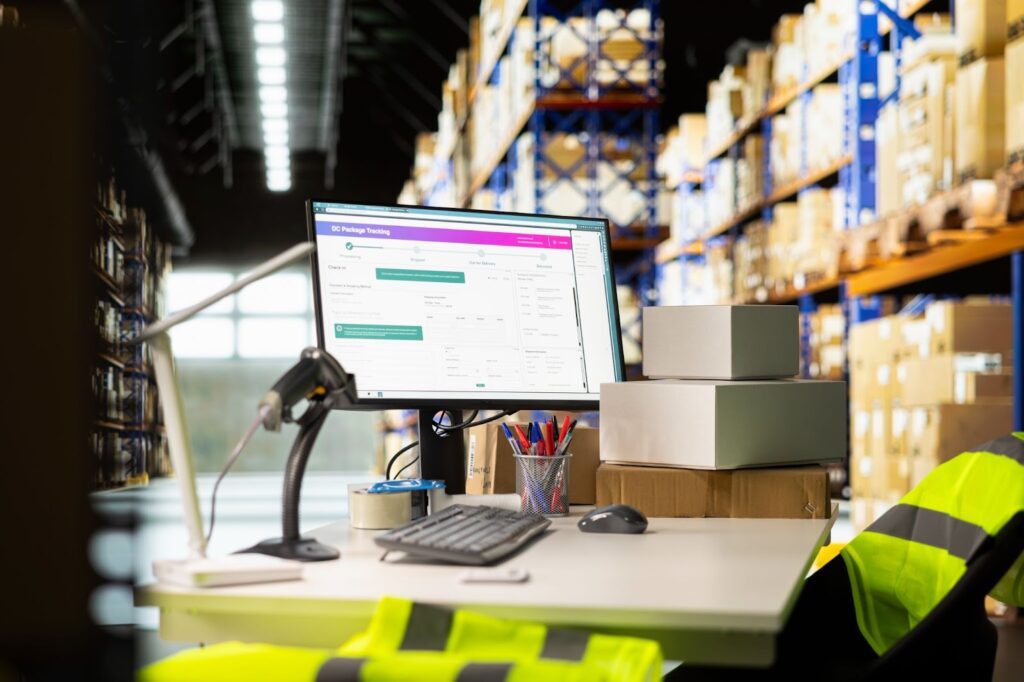
These real-world examples show the cloud’s operational speed and scale benefits, and why some terminals still choose modernized on-premise deployments where latency and legacy systems dominate.
Decision Framework – How to Choose Between These Two?
This terminal operating system comparison framework also helps ports to properly evaluate cloud versus on-premise models. These are based on scalability, greater compliance, integration complexity, and long-term strategy to support future-ready deployment decisions.
| Key Aspects | Cloud TOS | On-premise TOS | Best Fit Scenario |
|---|---|---|---|
| Multi-Site Operations | Centralized control and standardized deployment across terminals | Each site managed independently | Choose Cloud for large multi-terminal operators |
| Legacy Integrations | May require API redevelopment or migration planning | Deep, direct integration with existing systems | Choose On-Prem for heavy legacy environments |
| Data Sovereignty & Compliance | Dependent on cloud region and provider controls | Full physical control of data location | Choose On-Prem where strict regulations apply |
| IT Resource Requirement | Vendor manages infrastructure, upgrades, DR | Full internal management required | Choose Cloud if IT bandwidth is limited |
| Scalability & Growth | Rapid scaling with minimal infrastructure investment | Requires hardware expansion cycles | Choose Cloud for expansion-focused terminals |
| Latency & Automation Needs | Internet-dependent; optimized but network-reliant | Deterministic, ultra-low latency | Choose On-Prem for highly automated terminals |
| Upgrade & Innovation Speed | Continuous updates and feature releases | Periodic, project-based upgrades | Choose Cloud for faster innovation |
| Cost structure | Predictable OPEX | High upfront CAPEX | Choose Cloud for lower initial investment |
Conclusion
While deciding on an ideal terminal operating system, making the right choice between the cloud and on-premise TOS ultimately depends on a terminal’s overall regulatory environment, automation maturity, operational complexity, along long-term growth strategy.
Cloud TOS delivers better agility, scalability, and reduced IT burden, and the on-premise TOS also ensures maximum control with greater compliance assurance. For many operators, a hybrid model is also the right choice to achieve a balanced approach that perfectly aligns with technology deployment for future digital ambitions.
