

Multiple digital transformation technologies are paving the way towards 2026, expecting to bring a drastic revolution to growing businesses. In fact, business enterprises are ready to continue and expand their investments in digital transformation initiatives. This, as a result, helps them to strengthen their business models in the digital-first landscape. As per data, the digital transformation market is expected to reach USD 4.46 trillion by 2030.
However, before making any investment, it is essential to understand which key trends will dominate in 2026 and enable businesses to determine which investments are worth the time and resources. From the latest to the fastest-growing trends, here are some of the latest digital transformation trends 2026 that help your organization to improve operational efficiency, stay competitive, and meet the evolving demands of end-users.
What Are the Latest Digital Transformation Trends for Enterprises
The digital transformation landscape for business enterprises is evolving, shaping the modern business landscape. From Agentic AI to data analytics and generative AI, let’s dive deep and explore the latest enterprise tech trends in digital transformation that are impacting various industries.
1. Agentic AI
AI in digital transformation is a boon for modern enterprises. With this technology, businesses can choose static automation that helps them to think, decide, and execute on their own. And the impact is also completely visible. Reports also indicate that the growing Agentic AI market is expected to reach about USD 93.2 billion by 2032.
This is a clear shift towards autonomous workflows. Businesses that once relied on fragmented tools now focus on continuous and self-optimizing operations powered by AI agents, utilizing automation tools.
Agentic AI demonstrates its versatility across multiple fields, including insurance, retail, healthcare, telecommunications, logistics, and many others. While in the insurance field, it helps to speed up claims and enable better fraud detection, it also keeps the risk under control. Agentic AI in software development also plays a key role by enabling faster time to market and ensuring the best possible outcomes.
Retail, healthcare, BFSI, logistics, telecom, and other sectors using agentic AI can automate high-volume tasks, sharpen multiple decisions, and reduce operational drag. These help organizations shape the next operating model: automated, responsive, and built smartly for scalability.
2. Composable Enterprise & Modular Architecture
Enterprises are now maintaining a proper distance from rigid, monolithic systems and focusing on moving forward to smart, composable architecture, as it directly boosts stronger agility and speed.
According to one market analysis, the Composable Infrastructure market is projected to reach USD 39,366.6 million by 2032, indicating that many businesses worldwide belief this could be the future of multiple industries.
With modular building blocks, microservices, APIs, and “plug-and-play” packaged business capabilities, companies can successfully launch new features or update systems. This flexibility becomes very vital as market demands and customer expectations evolve rapidly.
3. Hyper-Automation
Among the latest digital transformation trends 2026, hyper-automation delivers a strong emphasis. In every phase of hyper-automation, business operations and workflow move faster than ever. The Hyper Automation market is growing rapidly, valued at approximately USD 46.4 billion in 2024 and is expected to continue rising through 2034.
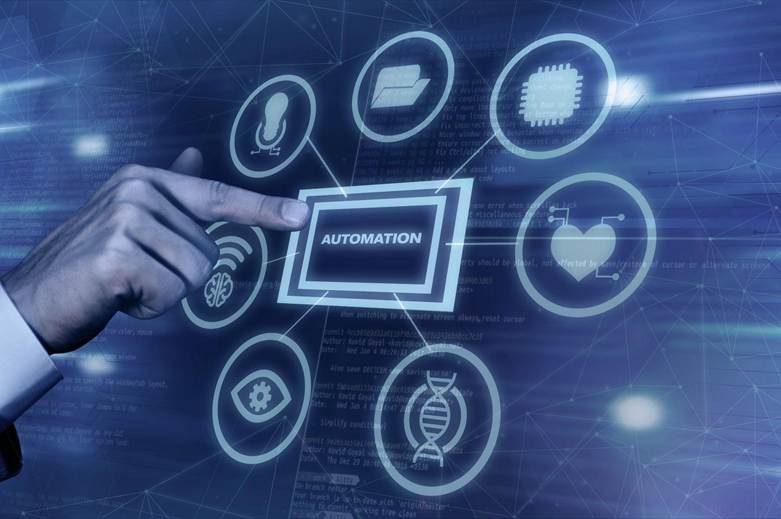
Thus, in businesses, excessive adoption of hyper-automation goes beyond bringing hyperautomation. This ensures minimal manual work, reduces the likelihood of errors, and enhances the overall speed and productivity of operations.
4. Generative AI
In the ever-evolving landscape of Artificial Intelligence, Generative AI has come a long way. It enables businesses to create new and realistic content, such as text, images, and videos. AI-powered Large Language Models also continue to excel in generating smart natural language text, translating languages, creating automated chatbots, and crafting creative content.
Generative Adversarial Networks (GANs) and Autoencoders also improve over time, creating more realistic images, videos, and audio. By 2026, as per Gartner, more than 80% of enterprises will have GenAI-enabled applications in production environments.
These statistics indicate that the future of digital transformation will leverage generative AI for personalized marketing campaigns, product innovation, and improved customer service. It helps businesses fulfill multiple capabilities, creating compelling and tailored content that resonates with their target audience.
5. Data Analytics
Businesses worldwide are creating a massive amount of structured, unstructured, and raw data daily. While this data can change the whole game, processing, and analysis, it also poses a significant challenge. It also helps companies identify the latest trends, answer questions, map out some of the latest solutions, and ultimately draw relevant conclusions like multiple events.
Furthermore, it can also help businesses to process a massive amount of data and extract the correct information for better remodeling strategies & making genuine decisions. You can also count on a dedicated data analytics services provider that helps you craft an effective digital transformation strategy.
6. Internet of Things (IoT)
The Internet of Things comes among the revolutionary digital transformation technologies, that promises excellent efficiency across multiple industries. While data is a vital component for both DX and IoT, IoT technology can utilize & convert it into useful information for the company. In such cases, a dedicated IoT platform enables the digitization of multiple physical products.
IoT also enhances customer satisfaction in the retail sector by delivering real-time and actionable insights. Within the healthcare sector, telemedicine is prospering with advanced IoT capabilities. When you partner with a dedicated IoT application development services provider, you can get assistance with requirement engineering and receive the necessary support for your entire lifecycle of IoT initiatives.
The global IoT Market is projected to surge from USD 547.8 billion in 2025 to USD 865.2 billion by 2030.
7. Artificial Intelligence and Machine Learning
AI and ML are superior and excellent drivers for planning and implementing digital transformation. AI in digital transformation helps companies to develop comprehensive strategies based on real-time market intelligence. With AI and ML, information can be analyzed in real-time. It also helps increase responsiveness to various changes, making business processes, including IT operations, more efficient.
AI utilizes some of the latest algorithms to create or adjust various programs by leveraging the insights gained from ML. At the same time, AI mimics human intelligence, which helps to identify and react to behavior and events. ML, on the other hand, utilizes big data to analyze & and correlate the latest patterns that offer insights into proper customer behavior.
It also provides proper input for the latest solutions that improve business processes and convey customer experiences. Furthermore, it can also help identify shifts in behavior and events as they occur, allowing for the development of the latest solutions to address the decline in sales. According to Gartner, by 2026, organizations that operationalize AI transparency will see their models achieve a 50% improvement in business goals.
8. The Low-Code Revolution
Businesses seeking a successful digital transformation journey can opt for both low-code and no-code platforms as the future of development. Among the latest digital transformation trends 2026, these platforms are built with robust capabilities that streamline the development process and deliver complex, enterprise-level solutions.
The platform’s unique drag-and-drop ability to build makes it one of the best and most popular digital transformation trends. Low-code or no-code development also simplifies the building of easy and effective solutions, making it very accessible to everyone.
In any field, these platforms minimize the overall need for deep backend expertise, enabling innovation and faster adoption. From reshaping the development approach to refining connected processes, low-code and no-code tools accelerate the whole time-to-market, enhancing interoperability and fostering creativity. The low-code development market is projected to reach $187 billion by 2030.
Along with these emerging trends, many other digital transformation trends are reshaping the digital landscape. At the same time, cyber resilience and blockchain technology safeguard multiple business organizations against cyber threats. Therefore, businesses that prioritize these trends can expect to observe remarkable growth and innovation in the future.
9. Quantum Computing
In 2026, Quantum computing will bring a significant change in how businesses use computers. Among the latest emerging technologies 2026, this new type of computing is extremely powerful because it utilizes the latest quantum bits. These qubits can help businesses complete complex tasks more efficiently than traditional computers. Due to this, quantum computing can significantly impact various areas.
As businesses and organizations begin to utilize the innovative features of quantum computing, it brings about a significant shift in the way they operate. It is also necessary to understand how quantum computers work and to seek the necessary guidance from experts.
By doing this, they can fully leverage the fantastic potential that quantum computing offers. These bring about digital transformation, leading to essential changes and creating significant opportunities for progress in the fields of technology and innovation.
The Quantum computing market is projected to reach $4 billion to over $20 billion by 2030-2032.
How the Enterprises Getting Shifted from Technology Adoption to Digital Mastery?
By 2026, enterprises will move far beyond just accepting “digital adoption.” It is also expected that the focus will shift entirely toward digital mastery, a state where technology, strategy, and culture align perfectly. The organizations that once viewed enterprise tech trends as a set of IT initiatives now consider it as the core of business evolution.
Every major enterprise today is built upon three pillars: data, intelligence, and trust. These define how modern companies operate, innovate, and compete in this competitive business world. While Artificial Intelligence, Cloud, and Data Analytics serve as the foundation, cybersecurity, blockchain, and IoT ensure strong resilience and better interconnectivity. However, the most critical success factor in this evolution is not about the technology itself, but how leadership integrates the latest technology focusing into purpose-driven business models.
The modern era of this reactive technology spending has come to an end; instead, enterprises are focusing to create the best and digital-first business blueprints that connect every process, ensuring a single intelligent ecosystem.
In 2026, digital transformation is not just about faster operations or cost efficiency. It’s about building organizations that are adaptive, intelligent, sustainable, and human-centered.
Conclusion
The journey of digital transformation technologies is not just a technological shift, but it is a philosophical redefinition of enterprise purpose and power. From the smart AI-driven automation to sustainable innovation, quantum computing to low-code revolution, the top digital priorities create a modern world where business and technology are inseparable.
Success in this digital era does not depend solely on who adopts the most advanced digital technologies, but integrates the technologies most intelligently. So, get ready to align with the digital initiatives and meet the ultimate strategic goals, customer needs, and ethical principles.
